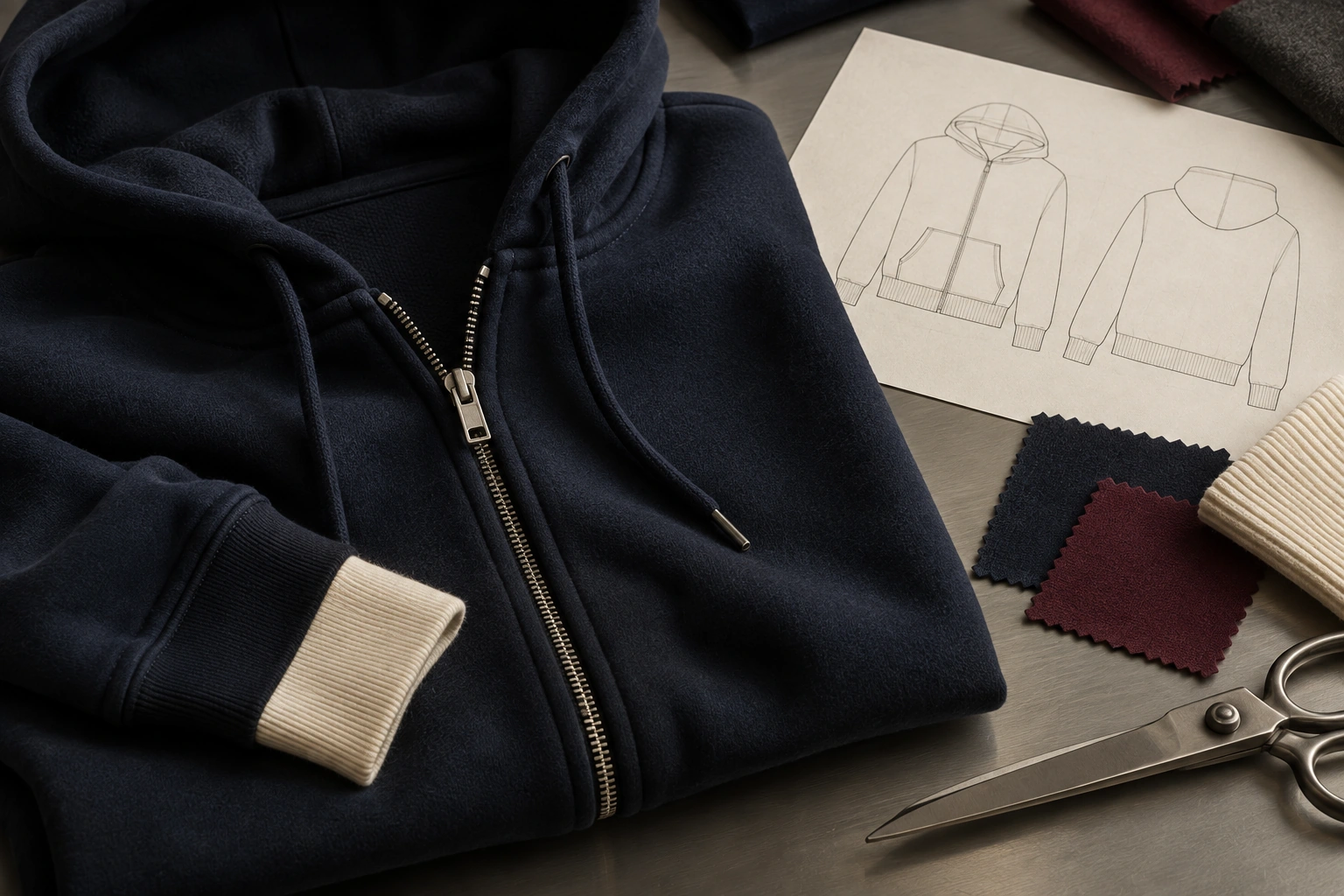
Custom clothing.
Your questions, answered.
Detailed answers from Salati Apparel on OEM and ODM clothing manufacturing, private-label streetwear, fabric selection, custom printing, sample development, MOQ and production planning.
Dongguan City Salati Apparel Co., Ltd. develops garments for clothing brands and wholesale buyers. Explore the questions below to prepare a clear brief, compare material and finishing options, and understand what needs approval before custom apparel production.
Discuss a clothing project with SALATIAbout SALATI
Company background, garment development expertise and visits to Salati Apparel in Dongguan, China.
Dongguan City Salati Apparel Co., Ltd., also presented as SALATI and Salati Apparel, develops and manufactures clothing for brands and wholesalers. The product focus includes custom streetwear: hoodies, T-shirts, matching sets, jackets, shirts, pants, denim, shorts and knitwear. Services connect design development, pattern making, sampling and garment production.
A manufacturing enquiry can begin with a tech pack, reference photograph or physical garment. Identify the product category, intended quantity and changes required so SALATI can assess the appropriate materials, construction and production scope.
About Salati Apparel and its company milestonesSalati Apparel is based in Humen, Dongguan, Guangdong, China, with production bases in Humen and Jiangxi. The company brings garment design, sample development and production coordination together for clothing brands and wholesale buyers.
For a factory or showroom visit, contact SALATI with preferred dates, product interests and the purpose of the meeting. Confirm the address and appointment before travelling, especially when the visit needs to include specific samples or production processes.
SALATI garment manufacturing and production workflowSALATI has an independent design and sample-development department. The design team includes designers, pattern makers and sample machinists with more than 15 years of experience, alongside seasonal development of more than 300 new styles.
For an ODM clothing project, share the target customer, product categories, reference styles and the details that distinguish the brand. Salati Apparel can then discuss a development direction. A seasonal collection reference is a starting point; the final fit, artwork, materials and branding still require a project brief and sample approval.
OEM and ODM clothing development at SALATIBuyers can contact Salati Apparel to arrange a showroom conversation or enquire about exhibition plans. A visit provides time to handle garments, compare fabrics and discuss construction or decoration with physical references on the table.
Bring collection images, product links, a preliminary quantity breakdown and any questions about sampling. SALATI’s exhibition archive shows booth displays, customer meetings and company visits; contact the team for confirmed upcoming dates rather than treating archive photographs as a current event schedule.
SALATI exhibitions, customer visits and partnershipsOEM, ODM & private label
How a clothing brand can develop original garments, adapt a reference style and prepare a private-label manufacturing brief.
For an OEM clothing project, a brand usually supplies the design direction and specifications for SALATI to develop into a sample and production reference. An ODM project starts with more development support, such as adapting a garment reference or exploring material, fit and detail options with Salati Apparel.
The service name alone does not define the work included. Agree responsibility for patterns, artwork, sourcing, sample revisions and final approvals in the quotation. Both routes need a clear garment specification before bulk production.
Compare SALATI OEM and ODM development routesSend SALATI a tech pack, sketch, reference image or physical sample, together with the garment type, intended quantity by style and color, size range and delivery destination. Add fabric preferences, artwork, label requirements and the date the collection is needed. A complete tech pack is useful, but it is not required for an initial discussion.
Separate fixed requirements from details that need development advice. For example, specify whether an oversized hoodie must keep a particular shoulder shape or whether Salati Apparel can suggest a suitable French terry or fleece. Clear priorities make the sampling quotation more useful.
Prepare a custom clothing manufacturing briefSalati Apparel can discuss fabric composition and weight, color, fit, dimensions, panel construction, lining, trims, zippers, buttons, artwork, washes, labels, hang tags and packaging. Custom streetwear development should consider these choices together because a finish or trim can affect construction and fit.
Mark important details on a technical drawing or reference photograph. Identify artwork sizes and placements, intended fabric handfeel and the desired silhouette. SALATI confirms feasibility and the final specification through the agreed development and sample-review process.
Custom apparel development optionsSALATI supports private-label apparel development with a brand’s own garment direction, artwork, main labels, care labels and packaging. A private-label hoodie or T-shirt can involve changes to the pattern, fabric and finishing as well as the visible logo.
Provide authorized brand artwork, label dimensions, placement instructions and packing requirements. Salati Apparel can include these details in the development brief and quotation. Review the branding on the sample and confirm the written specification before approving the production version.
Private labels, trims and garment packagingYes. Send Salati Apparel the product link or style ID and explain which features should stay and which should change. A reference can help communicate the silhouette, pocket layout, wash, decoration or overall direction for a custom garment.
Catalogue imagery does not replace an agreed specification. Ask SALATI to confirm the current material options, sample scope and price for the requested quantity. Supply artwork that the brand owns or has permission to use, rather than assuming third-party graphics shown in a reference can be reproduced.
Browse SALATI garment development referencesProducts, fabrics & fit
Practical choices for custom hoodies, oversized T-shirts, matching sets and denim, from fabric GSM to garment measurements.
For a custom hoodie enquiry, SALATI needs the silhouette, target fabric composition and GSM, size chart, hood construction, rib details and decoration requirements. Specify whether the garment is a pullover or zip-up, whether it needs a brushed fleece or loopback interior, and how the hem and sleeves should sit.
Heavyweight fabric alone does not guarantee the intended fit. Salati Apparel reviews the fabric with the pattern, shoulder shape, hood volume and finishing. A physical sample allows the brand to assess handfeel, drape and proportions before agreeing the production reference.
Custom hoodies and sweatshirtsSalati Apparel develops T-shirt references with different proportions, fabric weights and decoration directions. For an oversized or boxy-fit T-shirt, provide chest width, body length, shoulder width, sleeve dimensions, neckline and the desired hem position. Include the intended print or embroidery placement.
Share a reference garment or a clear fit image with the measurement sheet. SALATI can discuss cotton jersey, fabric weight and finishing against that brief. Review the sample on the intended fit rather than using “oversized” as the only size instruction.
Oversized and graphic T-shirt referencesSALATI’s development scope includes tracksuits, hoodie sets and other coordinated garments. Supply specifications for each piece, including measurements, fabric, color, rib or waistband construction, drawcords, artwork and the size breakdown. State which details must match across the set.
A coordinated look requires more than a shared color name. Salati Apparel should review the intended fabric, color reference and finishing for both garments together. Confirm how each piece is sampled, quoted, inspected and packed, including whether tops and bottoms are ordered in identical quantities.
Matching sets and custom tracksuit referencesSend Salati Apparel the garment drawing or reference, target fabric, waist and leg measurements, pocket construction, hardware and finishing direction. For denim or washed pants, include a physical or clear photographic reference for shade, fading and distress placement.
The wash, fabric and pattern should be reviewed together. SALATI needs to understand the intended final appearance and dimensions, not only the unwashed garment. Identify reinforced areas, raw hems and abrasion locations so the sample can be reviewed against a consistent set of requirements.
Custom denim garment referencesA fabric specification should state fiber composition, target weight in GSM, knit or weave structure, color, handfeel and intended finish. Identify the product and its use: a structured T-shirt, soft hoodie and lightweight woven shirt require different material decisions.
Send Salati Apparel a swatch or garment reference when touch and drape matter. Record which details are targets and which have already been approved. Final material availability, composition, weight and finishing are confirmed for the selected style before the production specification is agreed.
Fabric selection, garment weight and fitFrench terry typically has visible loops on the reverse, while brushed fleece has a softer raised interior. For a SALATI hoodie or matching set, the choice should reflect the intended handfeel, warmth, drape and season alongside composition and fabric weight.
Provide a preferred swatch or reference garment and explain how the finished piece should feel. Salati Apparel can review the proposed material during sampling. Two fabrics with the same GSM can still behave differently, so compare the actual sample instead of selecting only by a material name.
Compare fabric directions for custom streetwearGSM means grams per square metre and describes fabric mass per unit area. It is useful when briefing SALATI on fabric weight, but it does not by itself describe softness, opacity, durability or garment fit. Yarn, structure, composition and finishing also affect the result.
Specify a target GSM with the intended product and a reference for handfeel or drape. Salati Apparel can then discuss a material direction that supports the garment. Confirm the approved fabric and sample rather than treating a higher GSM as an automatic quality guarantee.
Plan fabric weight and garment proportionsSend SALATI a measurement sheet that names each point of measure and explains how it is taken. Include the base size, intended size range, grade increments and any tolerance requirements. A fit reference helps communicate the shape behind the numbers.
For oversized streetwear, distinguish chest width, shoulder drop, sleeve shape and body length rather than relying on a standard size label. Salati Apparel can review the pattern and sample against the agreed measurements. Confirm the final size breakdown separately for the production order.
Pattern making and fit-sample reviewPrinting, embroidery & washes
Artwork preparation and sample decisions for screen printing, DTG, puff print, embroidery and washed streetwear.
Provide Salati Apparel with the available vector file or high-resolution artwork, the actual design dimensions, color references and placement on the garment. Include a close-up image if a raised surface, thread texture or other specific finish is important.
Label the current artwork version and identify the intended fabric and garment color. SALATI can assess whether the detail, scale and placement suit the proposed process. A logo on a screen is not a finished production reference; approve the artwork and effect on the agreed sample.
Artwork, printing and embroidery optionsSALATI’s listed garment processes include screen printing, direct-to-garment digital printing and heat transfer. The appropriate route depends on the artwork, colors, fabric, garment color, placement, quantity and desired handfeel. Send those details together when requesting a print quotation.
Salati Apparel can discuss a process direction and sampling scope. Compare color, edge definition, coverage and touch on the intended material. Confirm any wash or durability review separately; a process name alone does not establish the performance of a finished custom T-shirt or hoodie.
Screen print, DTG and transfer developmentPuff print and other raised graphic references can be discussed with SALATI during custom streetwear development. Supply the artwork at its intended size, a placement drawing and a reference for the height and texture of the effect. Identify fine lines, small lettering and areas close to seams.
Salati Apparel needs to review the design with the selected material and finishing sequence. The sample should establish the approved appearance and handfeel. Do not assume every raised effect can be reproduced at every scale or combined with every wash without development work.
Raised print and surface-finish referencesFor embroidery or applied detail, SALATI needs the artwork, dimensions, thread or material direction, placement and the garment fabric. Add a reference for the desired surface: a flat embroidered logo, textured patch or chenille-style detail can require different sample decisions.
Review outline clarity, backing, attachment, comfort and fabric distortion on the sample. Salati Apparel can discuss simplification where small details do not translate well into stitching. The approved physical result should guide production alongside the artwork file and placement instructions.
Embroidery, appliqué and textured garment detailsShare a physical garment or clear images showing the desired shade, contrast, seam fading and overall surface with Salati Apparel. Terms such as acid wash, vintage wash and garment dye describe a direction, but a reference is needed to explain the intended result.
SALATI reviews the wash with the fabric, construction and decoration. Compare the finished sample for appearance, dimensions and agreed variation. Record the approved color and effect before production; an edited photograph or color name alone is not a reliable standard for a washed garment.
Garment washing, dyeing and vintage finishesMark each intended tear, abrasion, frayed edge or panel treatment on a garment drawing for SALATI. Add close-up references and show the approximate extent of the effect. Identify areas where seams, pockets or structural panels must remain intact.
Salati Apparel can review these details during sample development. Approve the placement and overall appearance on the finished garment, including the relationship to any wash or artwork. Clear location and construction instructions make “distressed” a usable specification rather than a general style label.
Distressing and raw-edge garment developmentA combination can be assessed during development, but each effect must be reviewed with the fabric, placement and process sequence. Send SALATI the complete design at the initial enquiry, including any printing, embroidery, beading, patches or garment wash intended for the same piece.
Salati Apparel should confirm the sampling scope before the combination is approved. Review the complete finished sample for appearance, handfeel, construction and any agreed care requirements. Approval of separate decoration examples does not automatically approve their combined effect on the final garment.
Review combined techniques through samplingMOQ, pricing & sampling
The information needed to assess a small-batch clothing enquiry, compare quotations and plan sample development.
SALATI confirms the minimum order quantity, or MOQ, for the actual style, fabric, color and technique. A collection total does not establish the quantity available for each design. Share the proposed units by style and color, plus the size breakdown, before comparing quotations.
Material sourcing, custom dyeing, trims and decoration can affect the viable order quantity. Salati Apparel can review the specific project rather than applying one advertised MOQ to every product. Request written confirmation of the quantity and specification covered by the quotation.
Clothing MOQ and quotation planningA startup clothing brand can send SALATI a small-batch enquiry with the exact garment, material direction and intended quantity by style and color. Low-MOQ feasibility depends on sourcing, construction, decoration and trim requirements; no universal small-order commitment applies to every style.
Explain whether the project is a first sample, a test collection or a repeat order. Salati Apparel can assess the brief and discuss the available development route. Confirm any proposed changes to the specification, cost or quantity before treating the enquiry as an agreed production order.
Prepare a small-batch apparel quotation requestA SALATI quotation depends on the fabric, garment construction, quantity, color and size breakdown, decoration, trims, labels and packaging. Sample development and shipment scope should also be identified so the buyer can understand what is included.
Compare quotations against the same specification. A lower unit price may refer to a different fabric, print, packing arrangement or delivery term. Send Salati Apparel a clear brief and request the applicable unit price, development charges, quantity basis and commercial terms for the actual order.
Compare custom clothing quotationsSample fees depend on the garment, materials, pattern work and techniques required. Ask Salati Apparel to identify the sample scope, included development work, timing and revision arrangements in the quotation. A complex washed or embroidered garment may need a different scope from a basic construction sample.
Confirm how additional changes will be reviewed and charged before requesting them. Any credit of a sample fee against a later production order is agreed for the individual project; it should not be assumed from the initial sample quotation.
Sampling scope and garment revisionsSALATI sample development moves from the brief and material discussion to a quotation, pattern making, sample construction and review. The buyer should evaluate measurements, fit, handfeel, artwork, finishing and labels against the intended product.
Send one consolidated set of comments with annotated photographs and measurement changes. Salati Apparel can review the revisions and establish the next sample version. Bulk planning should refer to the approved garment and written specification, including the final materials, artwork and order breakdown.
SALATI pattern making and sample approvalSALATI’s company profile describes pattern-making capability from three days and a seven-day sample-delivery capability. These are project-dependent capabilities, not a guaranteed schedule for every custom garment or bulk order. Fabric sourcing, construction, decoration and review requirements affect the actual timing.
Send Salati Apparel the reference, materials, artwork and requested review date. Confirm when the schedule starts, which sample stage is included and whether the date means completion, dispatch or arrival. A garment requiring custom materials or several revisions needs its own agreed development plan.
Plan a garment-sampling scheduleCustom apparel lead time depends on material availability, order quantity, garment construction, decoration, sample approvals and the production schedule. Shipment planning adds another stage. SALATI needs the intended launch or delivery date at the enquiry stage to assess the complete sequence.
Distinguish sample completion, bulk-production completion, dispatch and destination arrival. Salati Apparel confirms dates for the agreed project after reviewing the specification and approval progress. A fast pattern or sample-development target is not a promise of the same lead time for bulk manufacturing.
Understand the garment production sequenceSend Salati Apparel a consolidated revision list that refers to the sample version, measurement point or artwork location. Include annotated photographs and the proposed measurement or detail, rather than a general instruction such as “make it better” or “more oversized.”
Separate corrections against the existing brief from new design changes. SALATI can review the effect on materials, patterns, sample charges and timing. Once a revised version is approved, identify the final files and physical reference clearly so earlier instructions do not remain in circulation.
Review fit, construction and sample versionsQuality, packing & delivery
How specifications, inspection requirements, garment labels and shipment planning fit into a production order.
Agree the inspection stages, approved sample, measurement tolerances, appearance criteria, decoration placement and packing requirements with SALATI before production. Identify the checks and records required for the garment rather than relying on “premium quality” as a specification.
Salati Apparel can review the intended inspection scope alongside the order. Any specific laboratory testing, third-party inspection arrangement or acceptance method needs separate confirmation. Keep the approved sample and specification version available as a common reference when reviewing production quality.
Garment inspection and quality-control planningState the exact certificate, test report or supplier document required, including the product, material, facility or production scope it must cover. Ask Salati Apparel for the applicable record and confirm its validity, scope and relevance to the intended order before making a sourcing claim.
A general sustainability statement or fabric description does not establish certification for a specific garment. SALATI needs the destination-market and documentation requirements in the brief so availability, testing arrangements and any additional work can be reviewed before approval.
Plan product documentation and inspection requirementsMain labels, care labels, hang tags, individual garment packaging, carton marks and export packing can be included in a SALATI apparel project. Provide the brand artwork, label dimensions, content, attachment position and preferred packing format with the garment brief.
Review the label and packing references before production approval. Confirm the size and color breakdown for each pack or carton, and any destination or sales-channel requirements. Salati Apparel should quote and confirm these details for the specific order rather than treating every packaging option as standard.
Labels, packing and production approvalExport packing and sea, air or international express arrangements can be discussed according to the destination and agreed commercial terms. Send SALATI the destination, order breakdown, delivery priorities and any packaging or shipment-document requirements.
Separate garment production time from transit and arrival planning. Confirm which party handles each shipping stage and what the quotation includes. Salati Apparel should agree the actual packing, shipment scope and dates for the order; the production-completion date does not automatically mean delivery to the buyer on that day.
From garment production to packing and dispatchA repeat order should identify the previously approved style, sample version, material specification, artwork files, measurements, labels and packing instructions. Tell SALATI what must remain the same and whether any colors, quantities or sizes are changing.
Salati Apparel still needs to confirm current material availability, quantity requirements, price and scheduling. If a material or trim changes, review the proposed substitution before approval. A previous order is a useful reference, but the new order should have its own clear, confirmed specification.
Approved garment references and quality checksSALATI prioritizes reuse of large, intact remnants for smaller items, bags, panelled garments or other garment makers. Smaller suitable offcuts are sorted for routes such as wiping cloths, filling or fibre recovery for regenerated yarn, according to material suitability.
Hard-to-recycle mixed or contaminated scraps are passed to qualified recovery companies for appropriate treatment, including suitable alternative-fuel routes. Material that cannot be recovered is handled as industrial solid waste. These practices do not mean every SALATI garment contains recycled fibre; request the specification and supporting documentation for any product-level claim.
SALATI fabric reuse and textile-waste handlingEnquiries & product references
How to interpret collection imagery and send a clear manufacturing enquiry to SALATI.
Use SALATI catalogue images and garment-detail studies to identify the silhouette, fabric texture, decoration and finishing you want to discuss. Include the relevant images in your clothing manufacturing brief and note which details matter to your collection.
Send Salati Apparel the relevant product link and explain the details being referenced. Confirm the actual material, artwork, fit and finishing through the development brief and sample. A picture alone does not establish stock availability, a certified material or a final manufacturing specification.
Explore product references for a SALATI enquiryThe SALATI project planner prepares a garment brief for download, copying or use in an email. Completing the planner does not itself place an order, take payment, send an email or upload original design attachments.
Use the contact options to send the prepared brief and original files to Salati Apparel, then confirm receipt and the next development step with the team. Keep the product link, quantity breakdown and contact details together so the manufacturing enquiry can be reviewed in context.
Prepare a SALATI apparel project briefContact Salati Apparel through the published email or WhatsApp details with a product reference, quantity by style and color, material direction, artwork and destination. Include the target date and any information that still needs clarification.
For Dongguan City Salati Apparel Co., Ltd. to review the request efficiently, identify whether the project needs design development, a first sample or a quotation based on an approved specification. The contact page provides the current business contact details and a route to discuss the next step.
Contact SALATI about custom clothing manufacturing