Customers and SALATI team members reviewing garment samples and notes together
Exhibitions & conversations / The SALATI archive

Meet the people.
See how the work begins.

From a first look at the exhibition booth to a detailed review in the showroom, the best conversations start with a garment you can see and feel.

Around the sample table · From the SALATI photograph archive
01 / Preparing the exhibition

A booth built around the garments.

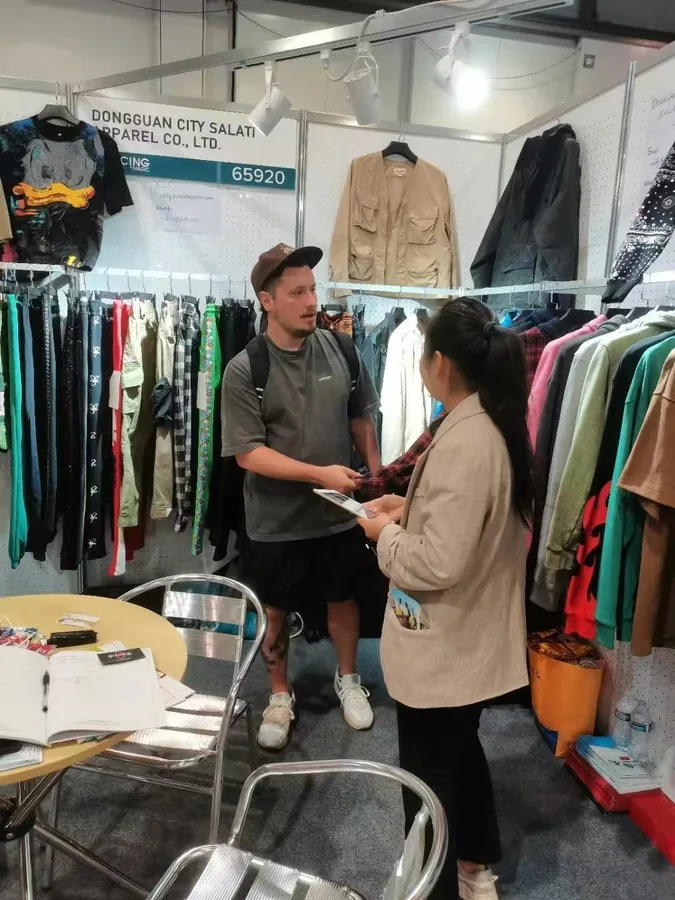
Our exhibition space brings the collection within reach. Display pieces above the rails introduce the range; the garments below invite a closer look. A table and chairs make room for a buyer to stop, compare references and talk through a collection with the team.

Visitors talking with the SALATI team among displayed garment samples
01 / SALATI archiveInside the exhibition booth

An open space to stop and explore.

Seen from the aisle, the booth brings together a high display of statement pieces, densely stocked garment rails and a small meeting area. The open entrance gives visitors a view of the collection before they step inside.

That arrangement supports two kinds of visit: a first look at the range and a longer conversation around the table. The samples remain close at hand, so an interesting silhouette or finish can become part of the discussion immediately.
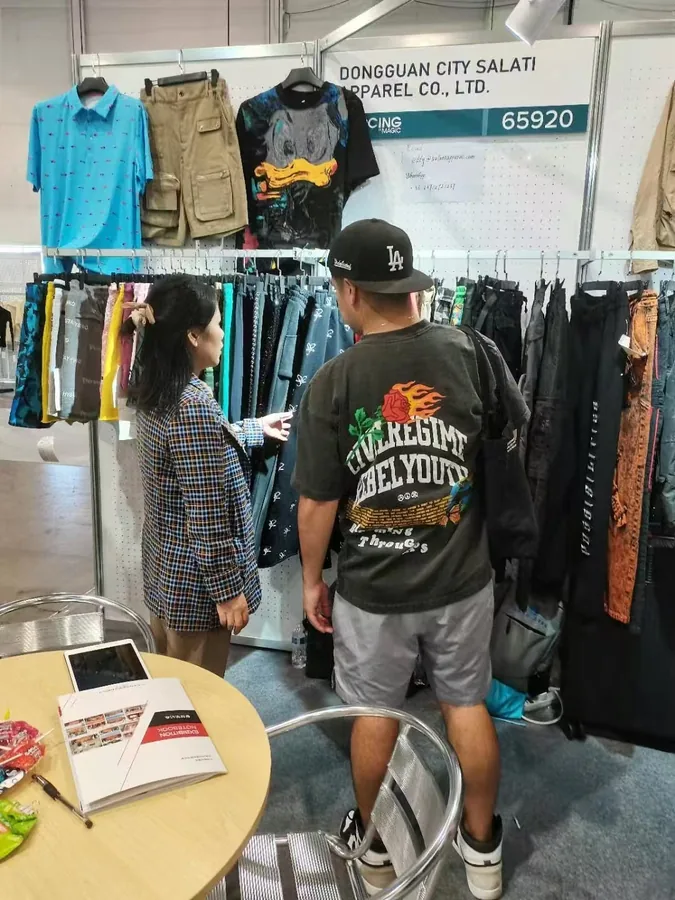
Visitors standing beside the streetwear samples in the SALATI exhibition booth
02 / SALATI archiveStreetwear brings us together

Let the collection make the introduction.

A visitor looks through the rail beneath a display of contrasting streetwear pieces. Bright color, graphic artwork and quieter garment references sit within the same compact space, giving buyers several points of entry into the collection.

Showing a complete garment helps make an idea tangible. A buyer can move from the overall look to the weight, construction and decoration, then explain which elements belong in their own range.

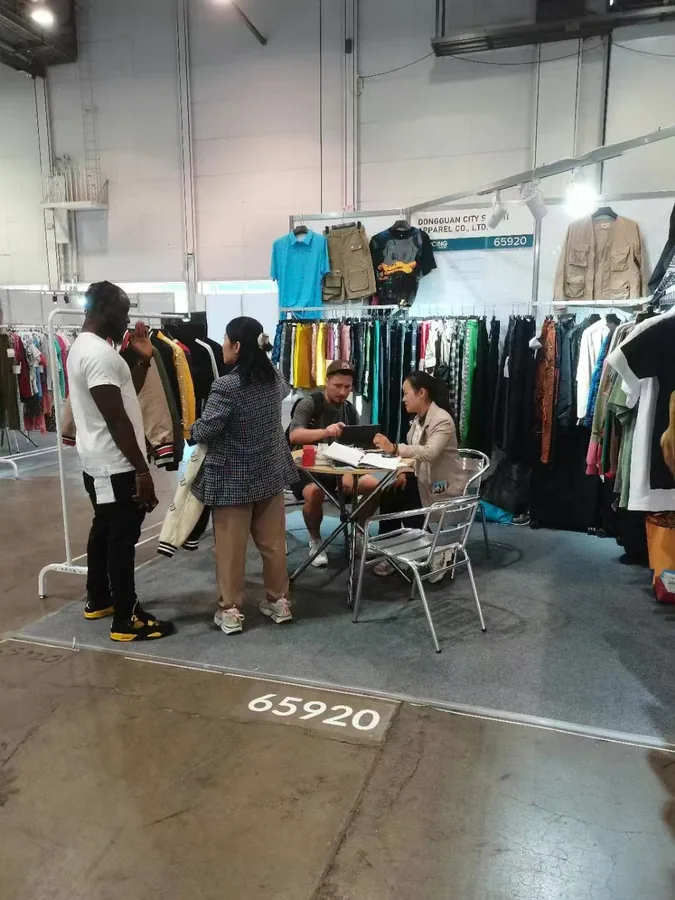
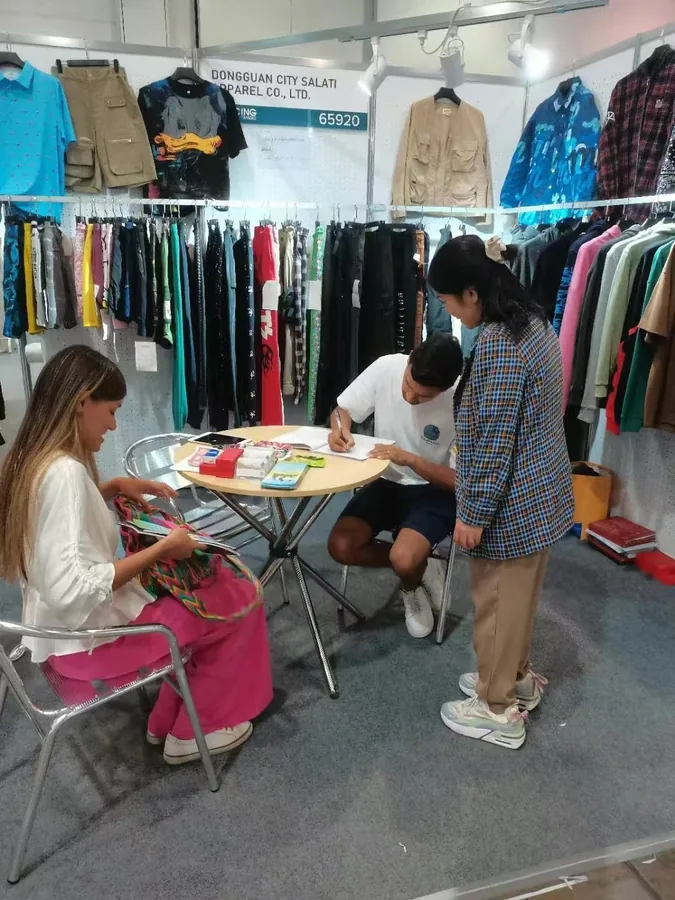
Visitors and SALATI staff seated at a table in the exhibition booth
03 / SALATI archiveMaking time to talk

Leave room for a proper conversation.

The small round table sits inside the display, with chairs, printed references and garments nearby. Visitors can take a seat while the surrounding rails keep the product discussion connected to physical samples.

For SALATI, booth preparation includes this space to listen. Understanding the buyer’s direction, product priorities and questions is how a passing visit can become a useful development conversation.

A visitor and a SALATI team member discussing garments beside the exhibition rack
04 / SALATI archiveA conversation about the collection

Keep the reference within reach.

Beside the hanging collection, a visitor and a SALATI team member talk face to face with a garment between them. The full rail behind them provides other colors and styles to compare without leaving the discussion.

This is where a broad request becomes more specific: the piece a buyer likes, the details they would change and the feeling they want to retain. The sample gives both sides a shared reference.

SALATI team and visitors holding a garment at an exhibition booth
05 / SALATI archiveTogether at the exhibition

Bring a piece out of the display.

A blue garment is held up between visitors and the team, against a backdrop of graphic tops and a full sample rail. Taking the piece off the hanger brings the product into the centre of the meeting.

It makes room to discuss the garment as a whole, then move closer to its artwork and finishing. These hands-on exchanges are an important part of how we introduce our work and learn what a customer is looking for.

02 / Meeting the people

Earn interest. Build understanding.

A good first meeting is about more than showing a catalogue. We listen to what the customer wants to make, explain the references in front of them and give their questions time. Exhibitions have helped SALATI develop new customers as our professional team has grown.

Conversations at the SALATI exhibition booth
06 / SALATI archiveConversations at the SALATI exhibition booth

A conversation in the middle of the collection.

Visitors gather with the team in front of the booth’s product and process displays. Printed material, hanging garments and a meeting table all sit within the same working area, giving the conversation several useful references.

The purpose is to connect the customer’s idea with what they can see and handle. Questions about a style can lead into fabric, decoration and the next information needed to explore a sample.

Visitors and a SALATI team member at a booth displaying streetwear samples
07 / SALATI archiveMeeting on the show floor

Make the welcome personal.

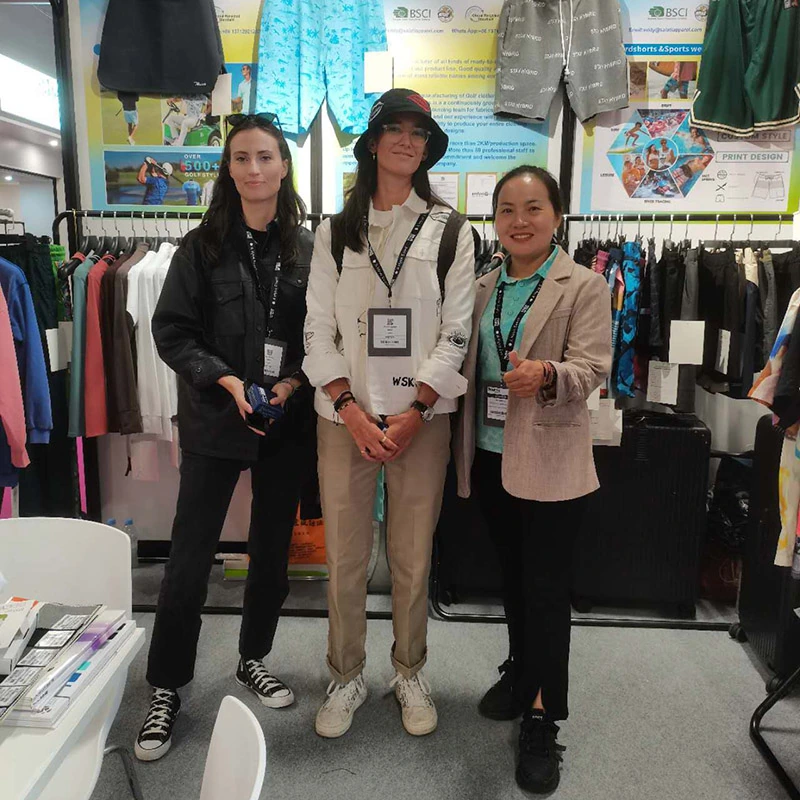
Three people pause for a photograph beside the booth’s round table. Sample garments and display panels frame the group, while refreshments and documents remain on the table from the day’s conversations.

A busy exhibition still leaves room for a personal welcome. Meeting the people behind the garments helps buyers put a face to the business and creates a more comfortable starting point for questions about their collection.

Group photograph with the SALATI team and exhibition visitors
08 / SALATI archiveA moment between conversations

Remember the people behind the meeting.

This close group photograph records a moment away from the sample-by-sample discussion. Clothing rails and fashion imagery place the meeting within the exhibition environment, while the informal framing keeps the focus on the people.

The relationship begins with that direct contact. Product knowledge matters, and so does knowing whom to return to when a new reference, question or collection idea comes up after the event.

SALATI team members and visitors posing in front of the exhibition display
09 / SALATI archiveFace to face

Introduce the team as well as the product.

Visitors stand with a SALATI team member in front of the booth’s information panels. The sample rail and table remain visible, placing the group photograph in the same space used for product conversations.

This face-to-face introduction is a useful part of choosing a manufacturing partner. Buyers can ask how an idea would move into development and get to know the team they may work with on the next stage.

Visitors at the SALATI exhibition booth
10 / SALATI archiveVisitors at the SALATI exhibition booth

Give every visitor time with the range.

Two visitors and a SALATI team member stand together beneath the upper garment display. Bright samples, a packed rail and the booth’s wall panels show how closely the people and product presentation sit together.

An exhibition brings different tastes and collection ideas to the same stand. We use those meetings to understand each visitor’s direction, rather than assuming the same sample or finish will suit every brand.

03 / From interest to a brief

Put the details on the table.

To turn interest into a project, we need a clearer picture of the garment. At the booth and in our showroom, conversations become more useful when the sample, artwork and notes can be reviewed together. The next step is to agree what should be developed and what still needs clarification.

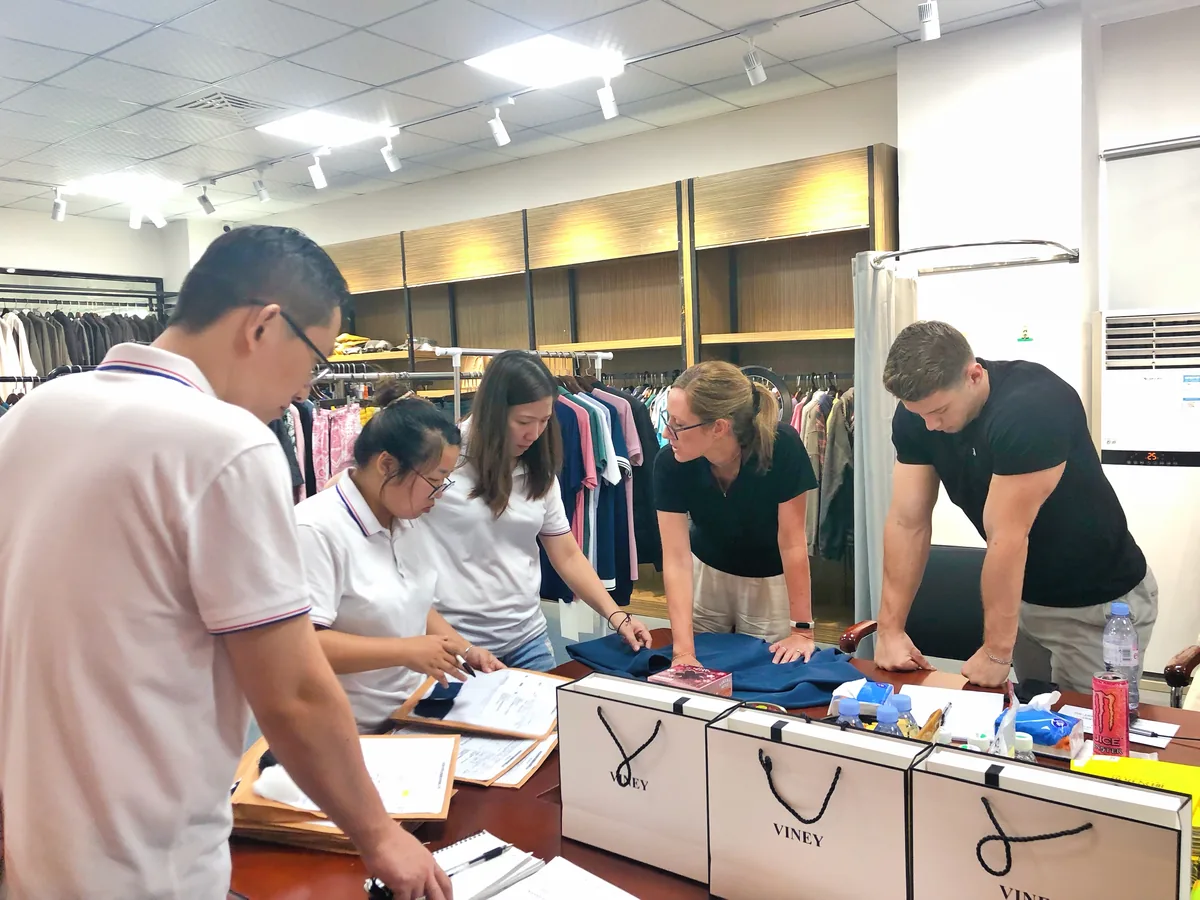
Customers and SALATI team members reviewing garment samples and notes together
11 / SALATI archiveAround the sample table

Review the sample together in the showroom.

The group gathers around garments and paperwork on a large table, with the showroom collection behind them. Several people lean into the same working area, making the sample the centre of the discussion.

A company visit gives a buyer more time to compare references with the team. Comments about the garment can be discussed alongside written notes, helping turn a visual preference into a clearer development brief.

Visitors leaning over garment references and development notes at a worktable
12 / SALATI archiveLooking at the details

Look closely before making a decision.

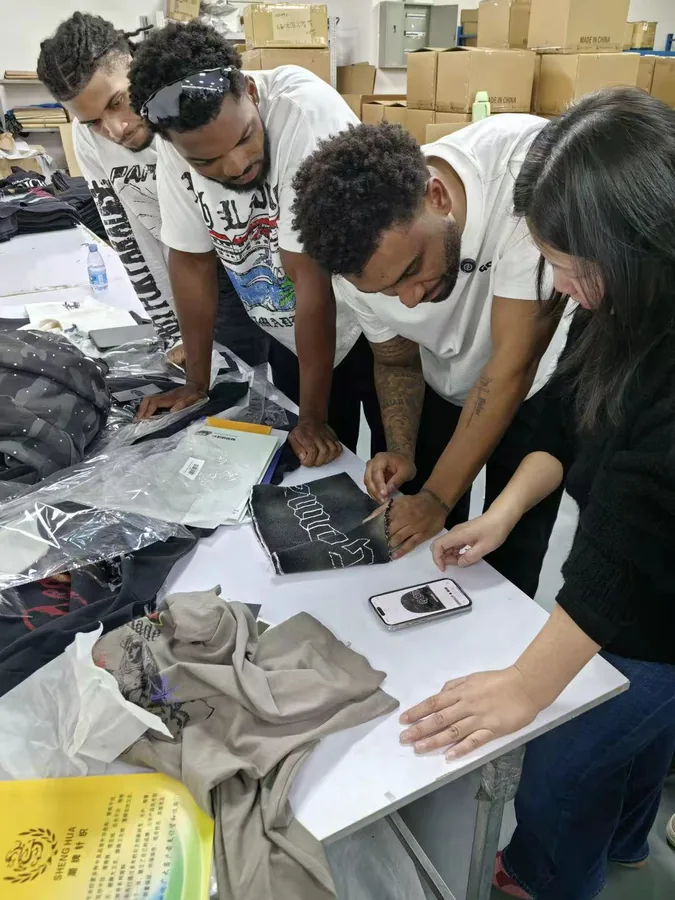
Visitors bend over a worktable holding a light-colored garment, printed references and a darker sample. Attention is directed to the details on the table rather than to a distant display.

This closer review is useful when a small difference matters: a surface effect, a construction detail or the relationship between a reference image and a physical piece. Bringing them together makes it easier to explain what the next sample should capture.

Customers and SALATI staff seated together for a garment development discussion
13 / SALATI archiveTime around the table

Give the discussion a working surface.

The rectangular table holds notebooks, papers and product references while visitors sit and stand around it. The nearby garment rail keeps physical examples close to a discussion that is already more detailed than a first introduction.

A useful meeting needs somewhere to compare, point and make notes. Gathering the customer’s priorities in one place helps the team understand which ideas are ready to explore and which questions need a follow-up.

Visitors and SALATI staff looking through garment and fabric references together
14 / SALATI archiveExploring the references

Compare the references side by side.

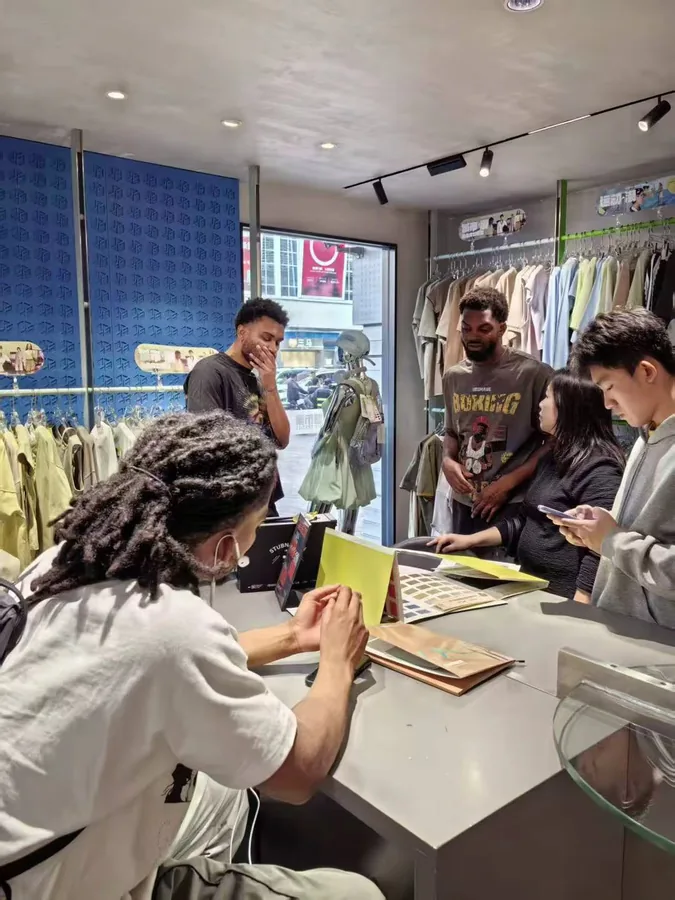
Several visitors gather around a laid-out reference board with the SALATI team. The shared view lets everyone focus on the same details, rather than discussing different examples from memory.

This kind of comparison helps establish a direction before development. The customer can point out what appeals to them, while the team can clarify how that choice relates to the intended garment and the other references under discussion.

Customers and the SALATI team standing together during a company visit
15 / SALATI archiveWelcome to the showroom

See the product and meet its makers.

A group pauses in front of the SALATI showroom wall, holding garments up for the photograph. The samples remain part of the visit even in a more informal moment with the team.

Customers have shared positive feedback on the products they see in our showroom. Meeting in person gives that response somewhere practical to go: a conversation about which styles, fabrics and details could become part of their own collection.

04 / Beyond the first meeting

A conversation can become years of work.

Many relationships that began through exhibitions have developed into long-term cooperation. Customers’ satisfaction with our showroom products is a starting point; continuing the relationship means carrying those conversations into development, production and the next collection.

A small group of visitors and SALATI team members posing at the company
16 / SALATI archiveA shared moment at SALATI

Welcome customers into the company.

Visitors and team members stand beneath a welcome banner, with garments held at the centre of the group. The setting moves the story from the exhibition stand to a visit at SALATI itself.

A visit creates space to see more of the range and spend time with the people involved in the work. It is one of the ways an initial introduction can grow into a closer working relationship.

Visitors and the SALATI team posing together in the showroom
17 / SALATI archiveA visit to SALATI

Make time beyond the sample discussion.

A group gathers in the showroom for a photograph, with raised thumbs and smiles in front of the SALATI wall. It records the people who came together during the visit, beyond the individual pieces on the sample table.

These shared moments are part of our company archive because cooperation is also personal. Alongside product reviews, getting to know one another helps create the familiarity that makes future conversations easier.

SALATI team group photograph at the company
18 / SALATI archiveThe people behind the work

The team behind the follow-up.

The SALATI team gathers for a company photograph, with colleagues arranged in two rows. It brings the focus back to the people behind the samples, visitor meetings and day-to-day communication.

Continuing a customer relationship takes work after an event finishes. References need to be understood, questions discussed and development decisions carried forward. The people behind that work are as much a part of the story as the garments on display.

SALATI team members and visitors standing together for a group photograph
19 / SALATI archiveTogether at SALATI

Bring the wider team into the relationship.

A larger group stands across the showroom, with a blue garment held near the centre. The wider view captures more of the team and the company setting than a typical photograph at an exhibition stand.

Long-term work grows beyond a single introduction. As a collection develops, the conversation involves the people who understand the references, the sample and the production requirements. Company visits help make that wider working relationship more tangible.

SALATI team and visitors gathering for a celebration in the showroom
20 / SALATI archiveCelebrating together

Leave room for shared moments.

People gather around a table for a celebration, holding colorful signs in a room lined with garment rails. The wide photograph captures a relaxed moment within the same environment where product conversations take place.

Our archive includes these occasions alongside exhibition and sample-review photographs. They reflect the human side of working together: welcoming visitors, getting to know the team and keeping a relationship going beyond the first collection.

Your next collection

Bring your references.
Let’s start a conversation.

Tell us about the garments you want to make, or arrange a visit to our showroom. We can discuss your direction, look through relevant samples and plan the next step together.