
Jersey, fleece & French terry
Cotton and cotton-blend directions for heavyweight T-shirts, hoodies, joggers and coordinated sweats.

Choose the cloth thoughtfully. Keep usable offcuts in circulation, and handle the rest according to their composition and condition.
Cutting a collection leaves pieces of cloth in different sizes and conditions. At SALATI, we give reusable material priority, then separate the remaining streams for recovery or controlled disposal.
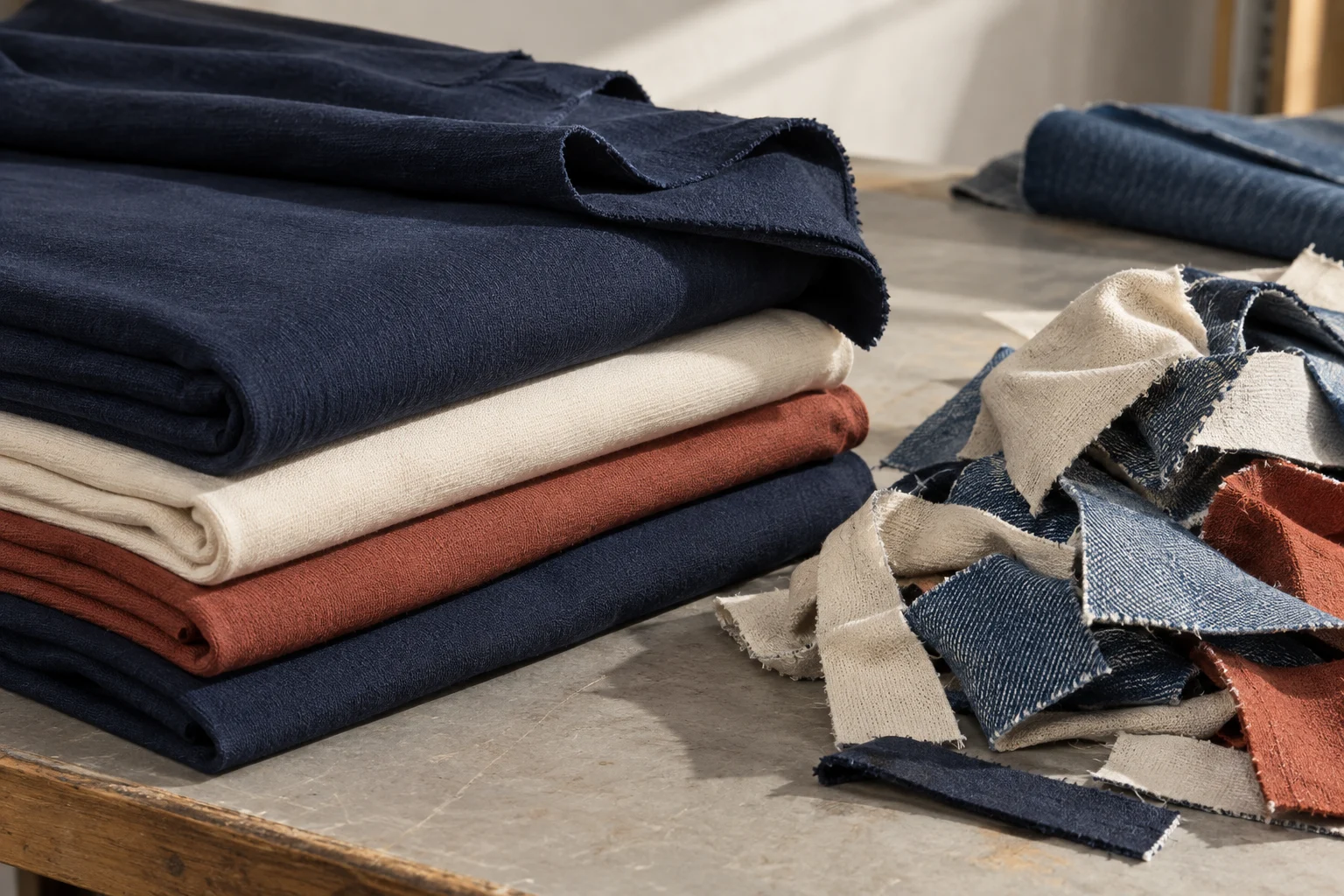
Size, fibre composition and cleanliness help determine the next use.
We prioritise internal reuse for small accessories, bags and panelled garments. Material that other factories can use is sold on for further garment production.
Reuse in our work · Supply to other garment makersWe collect and sort suitable offcuts for industrial wiping cloths or filling. Where the fibre and condition allow, they can also be mechanically opened and re-spun into recycled yarn for clothing and home textiles.
Wiping cloths · Filling · Recycled yarnResidues unsuitable for fibre recovery are handed to qualified recovery companies. Suitable material can enter alternative-fuel routes, including cement-kiln processing, subject to the receiving facility’s acceptance requirements.
Qualified recovery partners · Alternative-fuel recoveryThe unusable remainder is handled through regulated industrial-waste treatment. It is not casually dumped or sent to unmanaged landfill.
Controlled industrial-waste treatmentWe review the material, weight, fit and finishing direction alongside your design before pattern making and sampling. The exact composition and specification are confirmed for the individual garment.
Cotton and cotton-blend directions for heavyweight T-shirts, hoodies, joggers and coordinated sweats.

Material structure, pocket construction and wash references for utility styles, jackets and denim.

Cotton, linen, viscose, nylon, polyester and selected yarn blends vary with the shirt, outerwear or knitwear style.

Share the wash, dye, print, embroidery or distressing effect you want. Review its appearance with the chosen material during sampling, and define the care-label content for the finished garment.
Finish reference · Sample review · Care instructionsIf your brief requires a particular material certificate, test report or supplier document, identify it at the enquiry stage. Confirm the available documentation, its scope and its relevance to the selected material and order.
Required document · Material or site covered · Order applicabilityMain labels, care labels, hang tags and packaging can be included in your project. Tell us the pack format, label content and any material preferences so they can be reviewed alongside the garment.
Label artwork · Pack format · Packaging material requirementsUse the materials checklist to record composition, weight, finishing, documentation and packaging requirements before you send your enquiry.
SALATI prioritizes reuse of large, intact remnants for smaller items, bags, panelled garments or other garment makers. Smaller suitable offcuts are sorted for routes such as wiping cloths, filling or fibre recovery for regenerated yarn, according to material suitability.
Hard-to-recycle mixed or contaminated scraps are passed to qualified recovery companies for appropriate treatment, including suitable alternative-fuel routes. Material that cannot be recovered is handled as industrial solid waste. These practices do not mean every SALATI garment contains recycled fibre; request the specification and supporting documentation for any product-level claim.
SALATI fabric reuse and textile-waste handlingA fabric specification should state fiber composition, target weight in GSM, knit or weave structure, color, handfeel and intended finish. Identify the product and its use: a structured T-shirt, soft hoodie and lightweight woven shirt require different material decisions.
Send Salati Apparel a swatch or garment reference when touch and drape matter. Record which details are targets and which have already been approved. Final material availability, composition, weight and finishing are confirmed for the selected style before the production specification is agreed.
Fabric selection, garment weight and fitState the exact certificate, test report or supplier document required, including the product, material, facility or production scope it must cover. Ask Salati Apparel for the applicable record and confirm its validity, scope and relevance to the intended order before making a sourcing claim.
A general sustainability statement or fabric description does not establish certification for a specific garment. SALATI needs the destination-market and documentation requirements in the brief so availability, testing arrangements and any additional work can be reviewed before approval.
Plan product documentation and inspection requirementsMain labels, care labels, hang tags, individual garment packaging, carton marks and export packing can be included in a SALATI apparel project. Provide the brand artwork, label dimensions, content, attachment position and preferred packing format with the garment brief.
Review the label and packing references before production approval. Confirm the size and color breakdown for each pack or carton, and any destination or sales-channel requirements. Salati Apparel should quote and confirm these details for the specific order rather than treating every packaging option as standard.
Labels, packing and production approvalA sustainability requirement should identify the material or practice, the document needed and the order it applies to. Check the holder, scope, validity and product connection before using a certificate or report to support a claim about a garment.
Read the full guideA company document, material certificate and product test report answer different questions. Ask what entity or product is covered, who issued the document, when it was issued and whether it is current for the proposed order. A certificate image without that connection is not enough to establish the characteristics of your garment.
Write your sourcing preferences into the brief: fiber composition, requested recycled or organic content where relevant, finish, label information and packaging format. Availability and supporting documents must be confirmed for the chosen material. This website does not establish that all SALATI garments carry any particular material certification.
Consider care and useful life during sample review. Review construction, dimensions, decoration and intended care together, and record any performance requirements you want verified. Packaging can be discussed with product protection and shipment needs, including pack size, number of components and material preferences. Do not turn these choices into unmeasured carbon or water-saving claims.
| Document or requirement | What to check |
|---|---|
| Material specification | Composition, fabric identity and connection to the selected sample |
| Certificate | Holder, issuer, scope, validity and relevance to the order |
| Test report | Specimen, property, method, date and results actually reported |
| Packaging brief | Material, format, protection and required supporting documents |