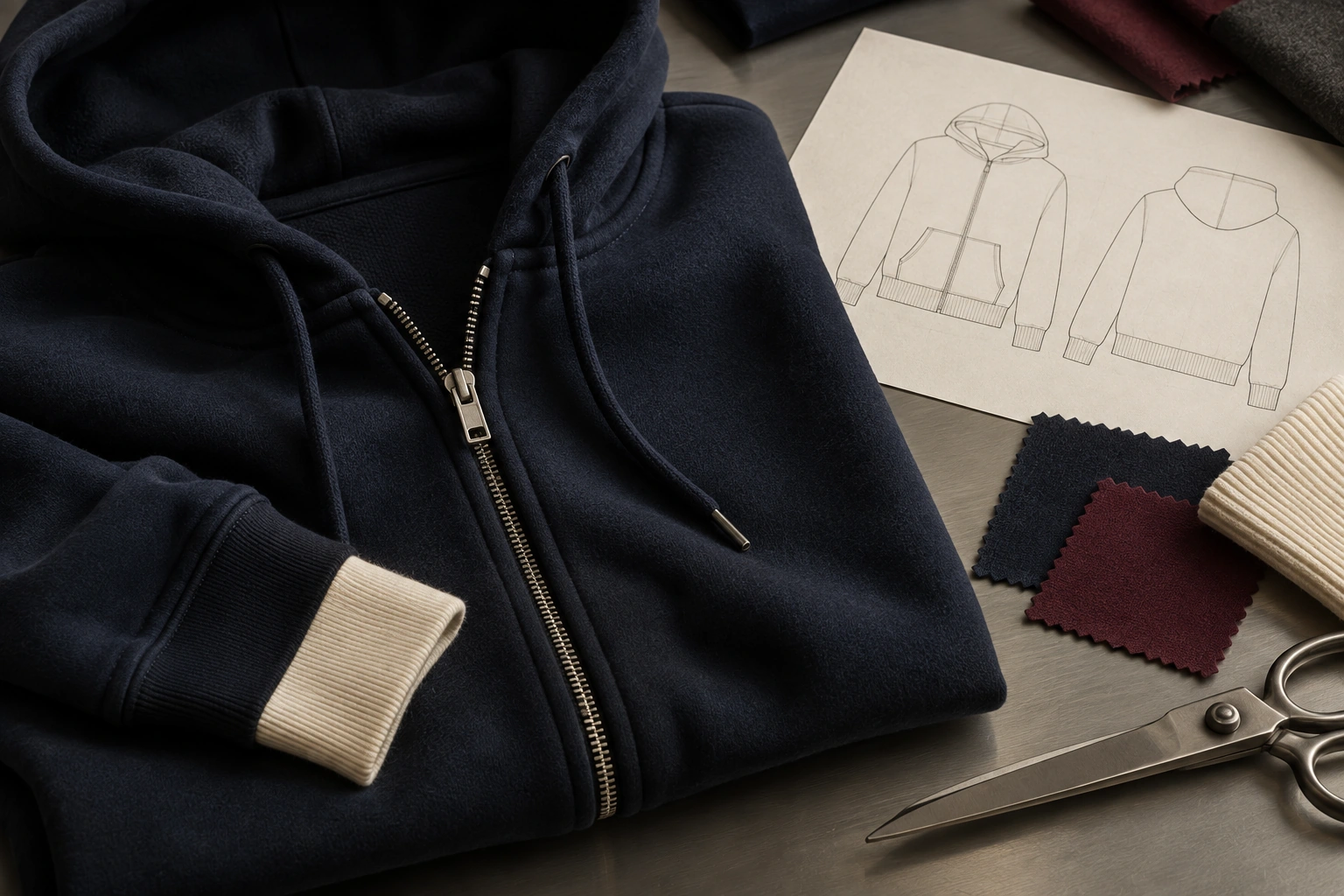
Every detail. Yours to define.
Develop private-label streetwear with Salati Apparel: custom fabrics, fit, printing, embroidery, washes, labels and packaging, from design brief to approved sample.
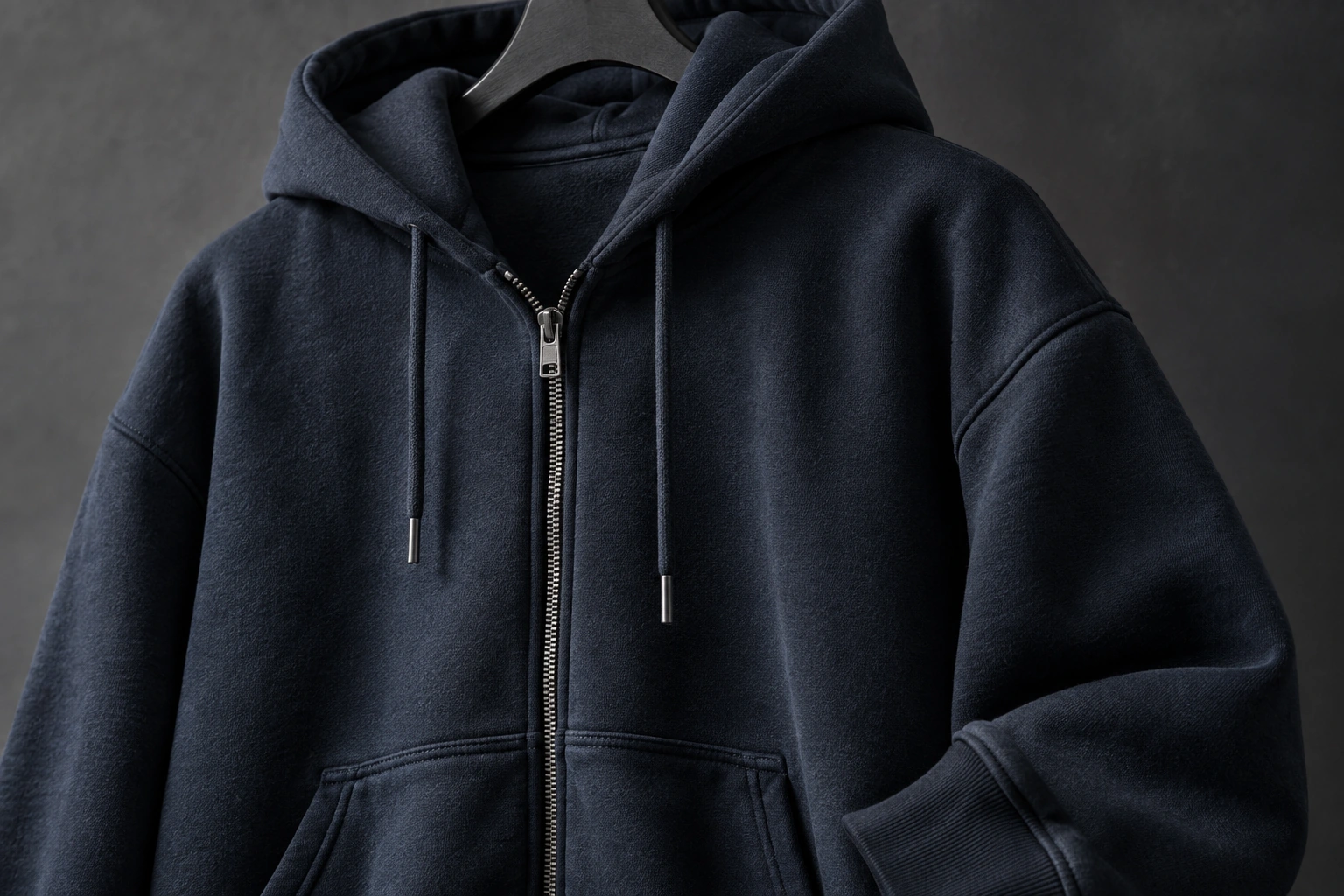
Fabric & fit
Specify the composition, handfeel and intended shape together. Add your measurement sheet and explain where the fit should sit between close, relaxed and oversized.
- Fabric and fabric weight
- Garment dimensions and fit
- Color references
- Construction and lining
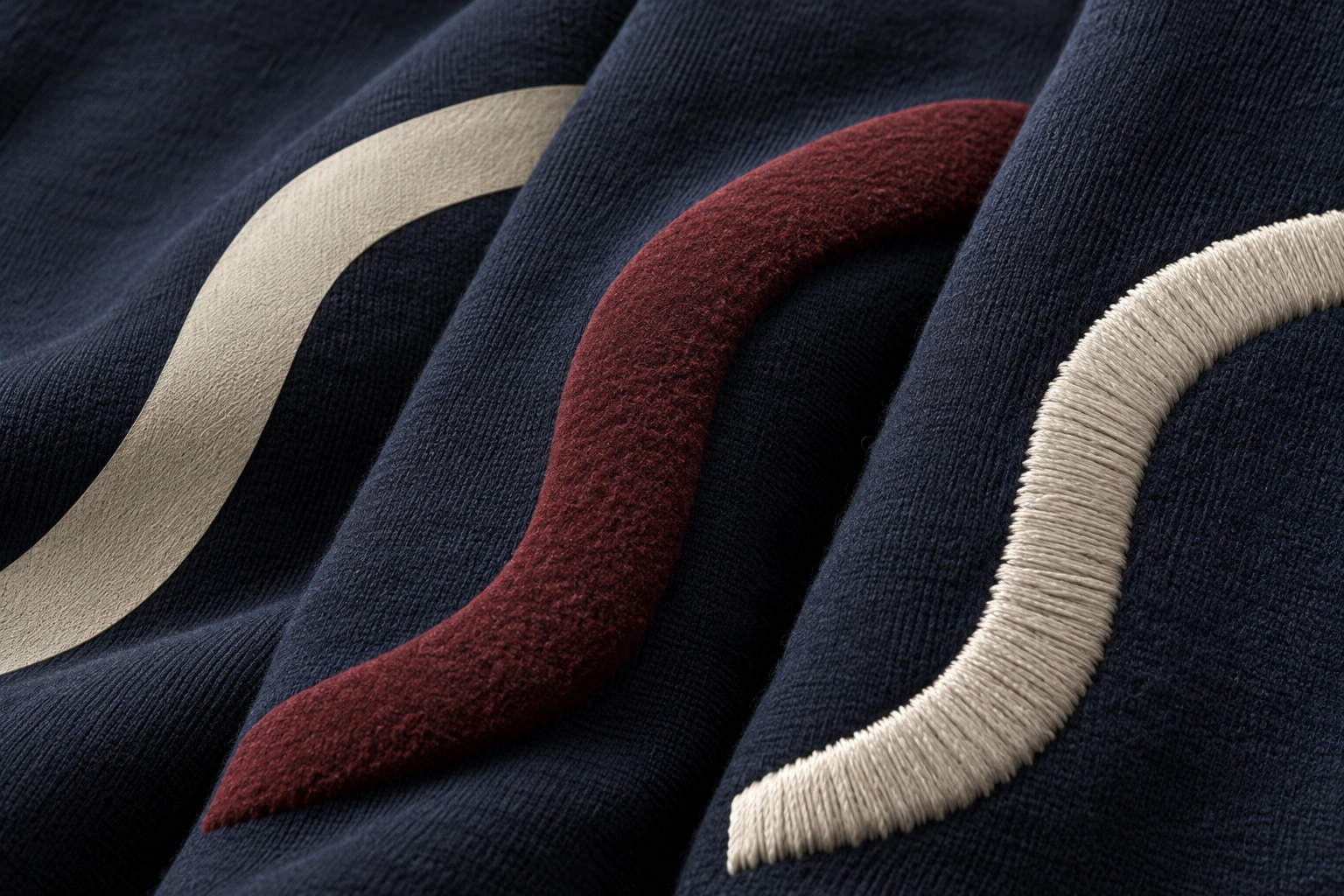
Surface & signature
Artwork and surface treatments should be considered alongside the base material. Share references for the look and feel you want, then define placement and technique for sample review.
- Print and embroidery
- Wash and dye direction
- Distressing and raw-edge details
- Artwork size and placement
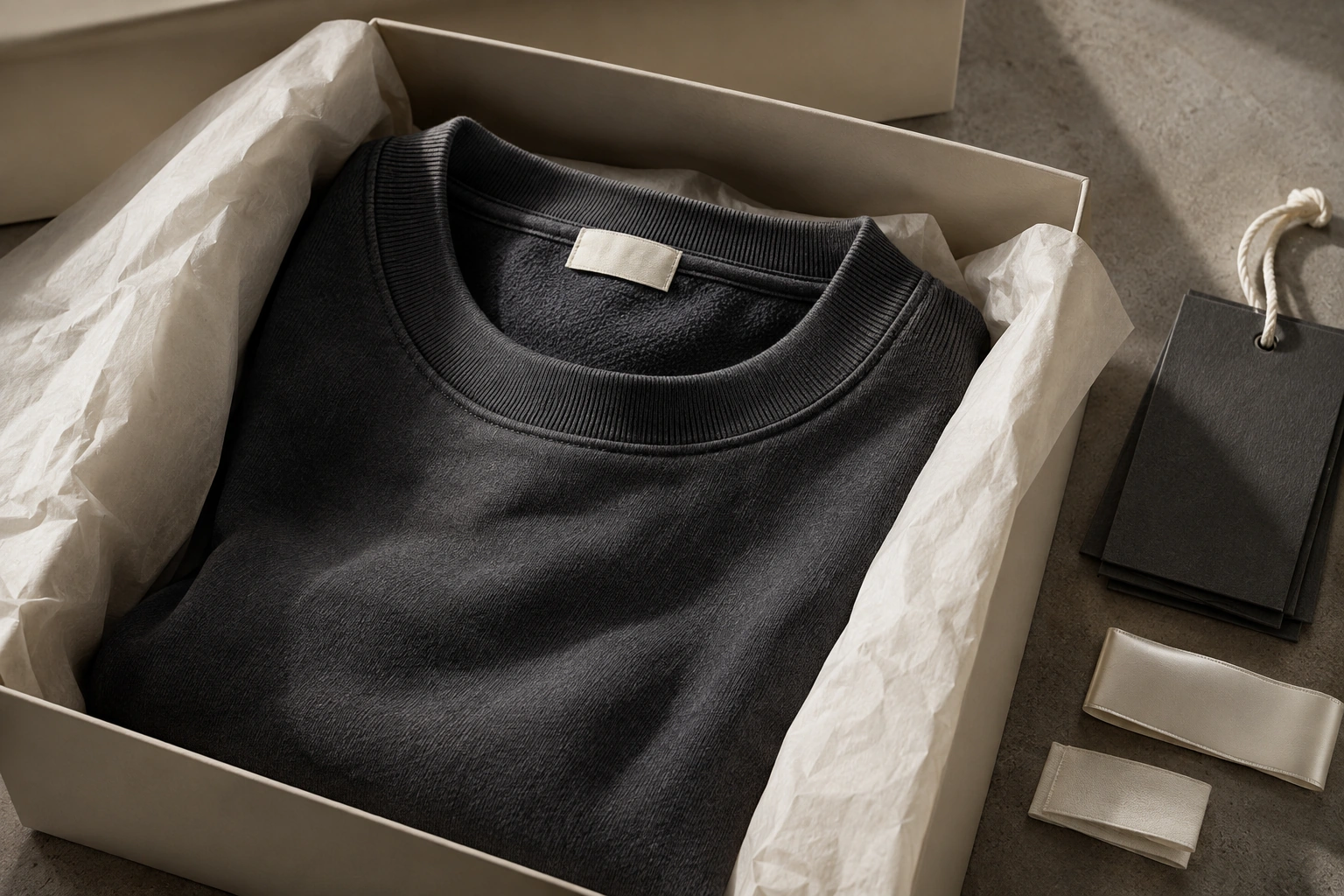
Private label, down to the last detail.
Plan the details a buyer sees when the package is opened. Supply label artwork, placement instructions and a clear packing breakdown.
- Main labels and care labels
- Hang tags and packaging
- Zippers, buttons and trims
- Individual packs and carton marks
Choose your starting point.
With an established design, provide the tech pack and specifications that the sample should follow. If the idea is still taking shape, begin with a sketch or sample and identify the details that need development.
- Your complete tech pack
- Sketches or technical drawings
- Reference images with annotated changes
- Physical samples and measurement sheets
What can SALATI develop for your label?
SALATI supports custom apparel development from a tech pack, sketch, reference image or physical sample. The brief can cover fabric, fit, construction, artwork, washes, trims, labels and packaging. Agree the development scope and review a sample before confirming the production specification.
Read the full guideStart with what is decided and identify what needs a recommendation. A complete tech pack and a reference-led project can require different amounts of pattern development, sourcing and sampling. The quotation should identify the work included.
| Starting point | Send with your enquiry | Decisions before sampling |
|---|---|---|
| Your own design | Current tech pack, artwork and intended quantities | Material sourcing, construction and any conflicting instructions |
| Sketch or reference garment | Front/back references and the changes you want | Measurements, pattern, materials and decoration specification |
| SALATI product reference | Product link or ID, required changes and quantity | Current specification, custom details and sample scope |
| Private-label details | Logo, label and packaging artwork where available | Format, placement, content and what the sample will include |
Before you move forward
- Give each style a name or code and identify the current files.
- Separate approved artwork from inspiration images.
- Confirm sample fees, any revisions and which trims are final.
- Record the approved sample and specification before production.
Explore the details
SALATI’s customization scope includes composition, fabric weight, color, garment dimensions, fit, construction and lining. Send a swatch or physical garment if its handfeel and shape are important. Confirm the proposed material rather than relying on a photograph or the word heavyweight.
For a hoodie, describe the hood, pocket, rib and closure alongside the body fit. For coordinated sets, define the top and bottom separately and review their proportions together. SALATI develops heavyweight T-shirts, hoodies, washed garments and sets; exact material specifications are agreed for the project.
- Measurement sheet or fit reference
- Main fabric, rib and lining references
- Color direction and the details that must remain unchanged
Logo application, main labels, care labels, hang tags, zippers, buttons and other trims can be included in the development brief. Provide dimensions, artwork versions and placement instructions. A label design and a print design are separate production files even when they use the same logo.
Confirm whether the sample includes the intended labels, hardware and packaging or temporary substitutes. Keep packing format and carton marks in the same order record so the finished goods can be identified by style, color and size.
- Artwork with actual dimensions and color references
- Label content, size identification and placement
- Individual pack and carton requirements
Ask the quotation to identify pattern development, material sourcing, decoration sampling, the garment sample and packaging where relevant. Sample fees depend on the style, materials and processes; any credit against a production order is confirmed by project.
If a specification changes after review, agree its effect on the sample, price and schedule. An approved silhouette does not approve a substituted fabric or unfinished decoration. Keep those items open until the intended version has been reviewed.
A few questions.
A clearer brief.
For an OEM clothing project, a brand usually supplies the design direction and specifications for SALATI to develop into a sample and production reference. An ODM project starts with more development support, such as adapting a garment reference or exploring material, fit and detail options with Salati Apparel.
The service name alone does not define the work included. Agree responsibility for patterns, artwork, sourcing, sample revisions and final approvals in the quotation. Both routes need a clear garment specification before bulk production.
Compare SALATI OEM and ODM development routesSALATI supports private-label apparel development with a brand’s own garment direction, artwork, main labels, care labels and packaging. A private-label hoodie or T-shirt can involve changes to the pattern, fabric and finishing as well as the visible logo.
Provide authorized brand artwork, label dimensions, placement instructions and packing requirements. Salati Apparel can include these details in the development brief and quotation. Review the branding on the sample and confirm the written specification before approving the production version.
Private labels, trims and garment packagingSend SALATI a tech pack, sketch, reference image or physical sample, together with the garment type, intended quantity by style and color, size range and delivery destination. Add fabric preferences, artwork, label requirements and the date the collection is needed. A complete tech pack is useful, but it is not required for an initial discussion.
Separate fixed requirements from details that need development advice. For example, specify whether an oversized hoodie must keep a particular shoulder shape or whether Salati Apparel can suggest a suitable French terry or fleece. Clear priorities make the sampling quotation more useful.
Prepare a custom clothing manufacturing briefSalati Apparel can discuss fabric composition and weight, color, fit, dimensions, panel construction, lining, trims, zippers, buttons, artwork, washes, labels, hang tags and packaging. Custom streetwear development should consider these choices together because a finish or trim can affect construction and fit.
Mark important details on a technical drawing or reference photograph. Identify artwork sizes and placements, intended fabric handfeel and the desired silhouette. SALATI confirms feasibility and the final specification through the agreed development and sample-review process.
Custom apparel development optionsYes. Send Salati Apparel the product link or style ID and explain which features should stay and which should change. A reference can help communicate the silhouette, pocket layout, wash, decoration or overall direction for a custom garment.
Catalogue imagery does not replace an agreed specification. Ask SALATI to confirm the current material options, sample scope and price for the requested quantity. Supply artwork that the brand owns or has permission to use, rather than assuming third-party graphics shown in a reference can be reproduced.
Browse SALATI garment development referencesA startup clothing brand can send SALATI a small-batch enquiry with the exact garment, material direction and intended quantity by style and color. Low-MOQ feasibility depends on sourcing, construction, decoration and trim requirements; no universal small-order commitment applies to every style.
Explain whether the project is a first sample, a test collection or a repeat order. Salati Apparel can assess the brief and discuss the available development route. Confirm any proposed changes to the specification, cost or quantity before treating the enquiry as an agreed production order.
Prepare a small-batch apparel quotation request