Quick answer
Choose heavyweight T-shirt fabric by comparing the finished material, its behavior in your intended fit, and the decorated garment after washing. GSM helps you describe weight, but it cannot choose the fabric for you. Start with the silhouette and wearing experience you want, then use swatches and a sample to turn that direction into a specification.
Start with the garment you want to make
“Heavyweight” may mean a compact, boxy tee, a relaxed garment with a substantial drape, or a washed graphic style. Those are different briefs. Describe the shoulder line, body width, body length and sleeve volume before asking for the heaviest available fabric.
Include how the customer will wear it: alone, under a jacket or as part of a matching collection. A reference garment is useful, especially when you explain which details matter. You might want its neckline and handfeel while changing its sleeve and body proportions.
Understand what GSM tells you
GSM means grams per square meter: the mass of a defined area of fabric. It is not the weight of the complete T-shirt, and it does not directly measure thickness, softness or durability.
Compare the finished fabrics intended for cutting, rather than assuming an unfinished fabric specification describes the final garment. Yarn, knitting and finishing choices interact with weight and dimensional behavior. Cotton Incorporated discusses those relationships in its technical guidance on processing cotton knits. The buying implication is straightforward: keep a physical fabric reference alongside the number.
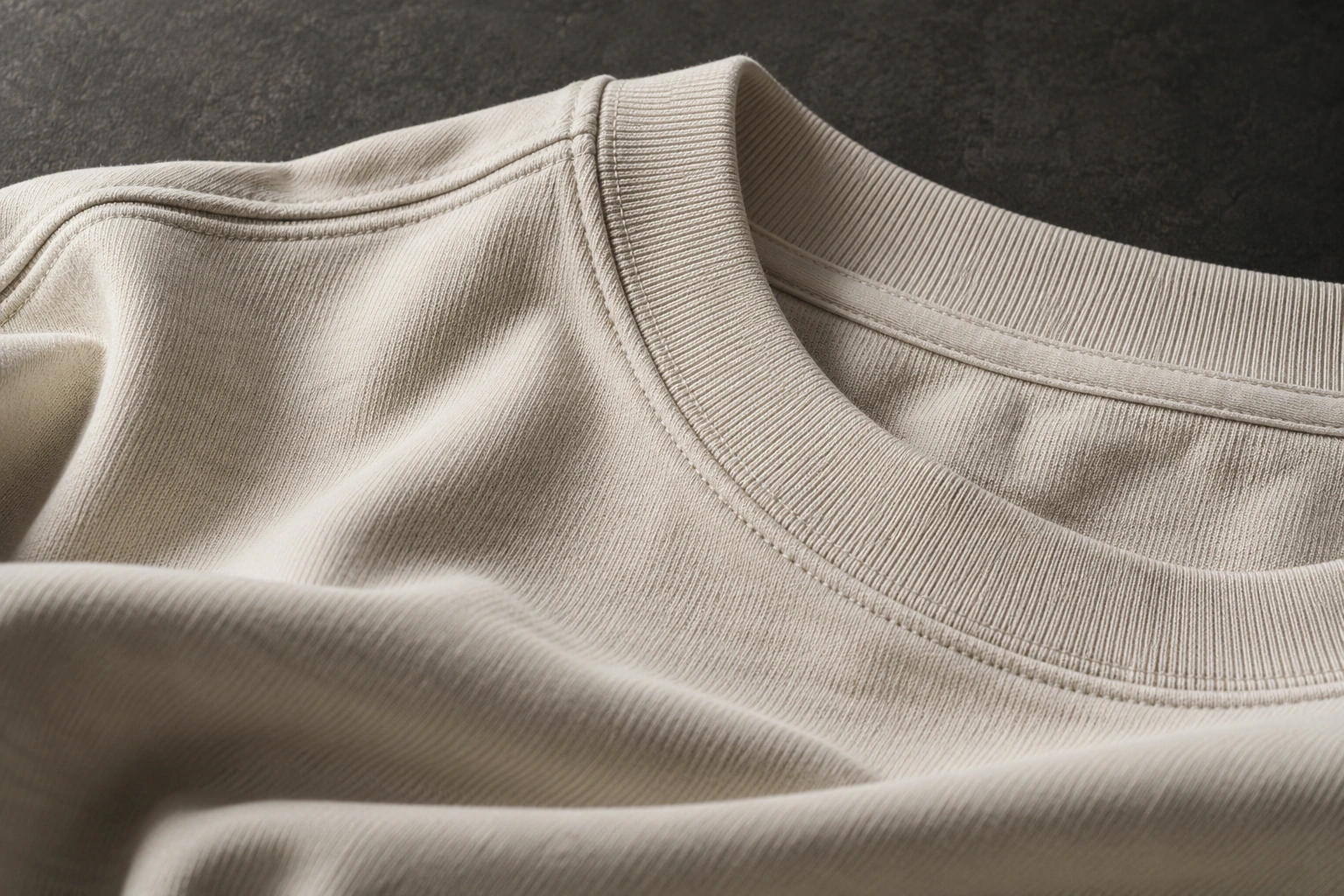
Compare material directions against your priorities
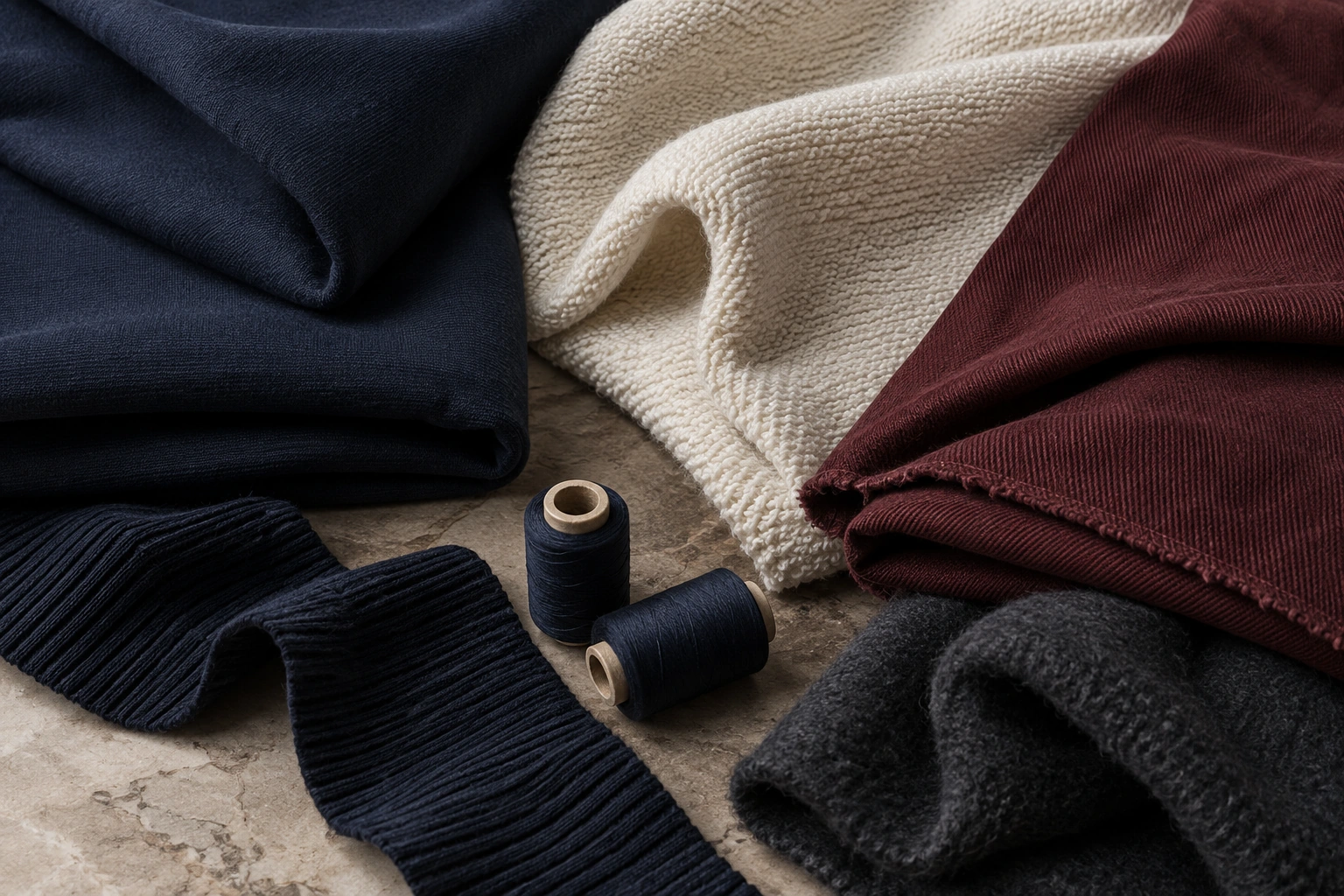
SALATI’s heavyweight oversized T-shirt development range includes cotton, cotton-spandex and cotton-polyester options. The appropriate composition and weight should be agreed for your design.
Treat this as a comparison framework, not a ranking. A fiber name alone does not establish a finished fabric’s performance. Ask for the actual composition of each proposed option and keep that information attached to its swatch.
| Material direction | Put this in the brief | What to compare in the sample |
|---|---|---|
| 100% cotton | Desired handle, surface, silhouette and finish | Drape, neckline, dimensions and appearance after the agreed wash |
| Cotton-spandex | Exact blend proposal and where stretch matters | Movement, recovery, fit and decoration when worn |
| Cotton-polyester | Exact blend proposal and intended handfeel | Surface, color, decoration compatibility and wash behavior |
Review the surface and neckline together
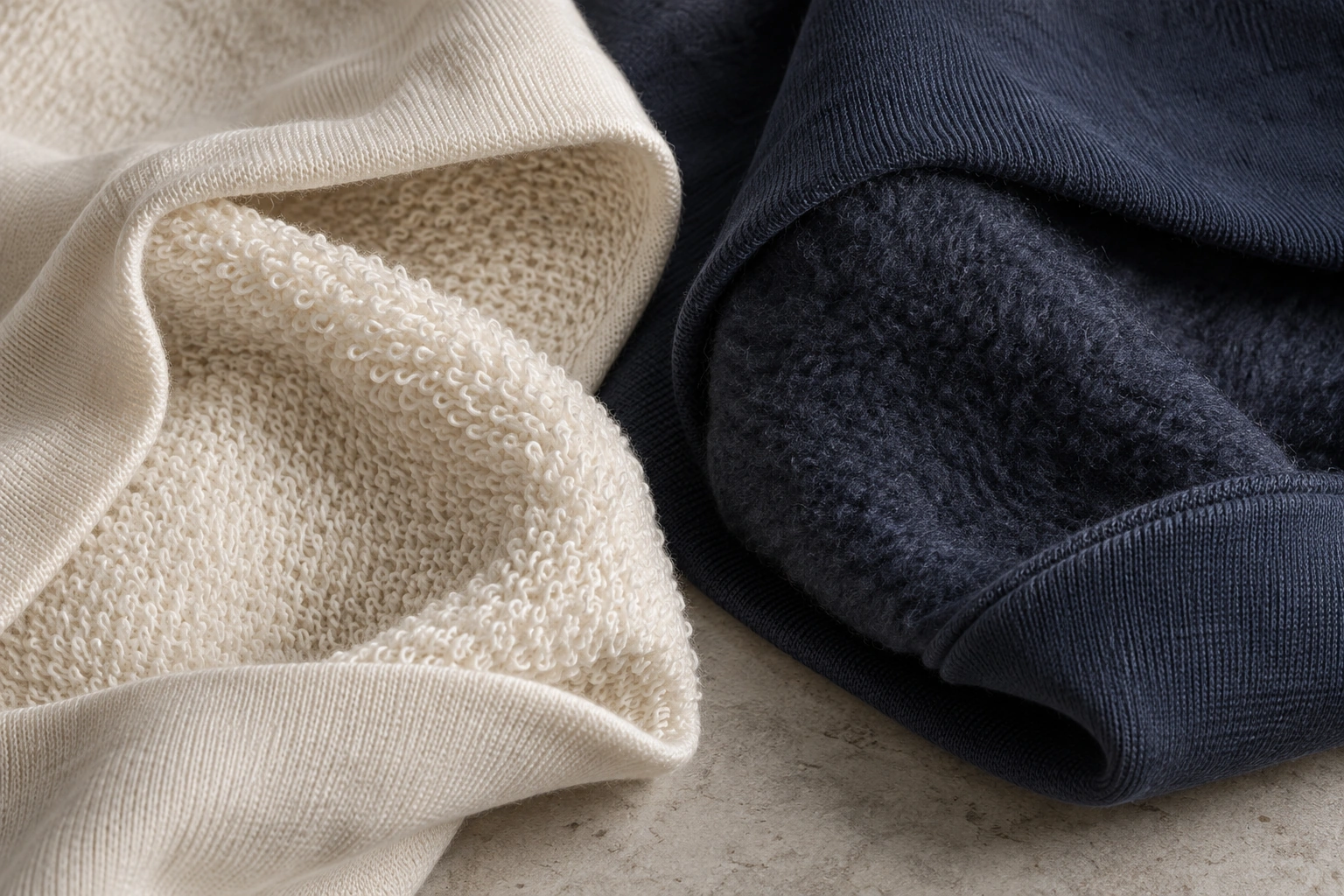
Lay the candidates beside one another in similar lighting. Look at the face, reverse and cut edge; handle a large enough piece to judge how it hangs. For a pale color, inspect coverage on the intended wearer rather than assuming extra weight guarantees opacity.
Then review the collar. Record rib width, opening, attachment and the way it sits against the body. A substantial body fabric and a poorly resolved neckline can give conflicting impressions. Photograph the front, back and side so later revisions have a consistent reference.
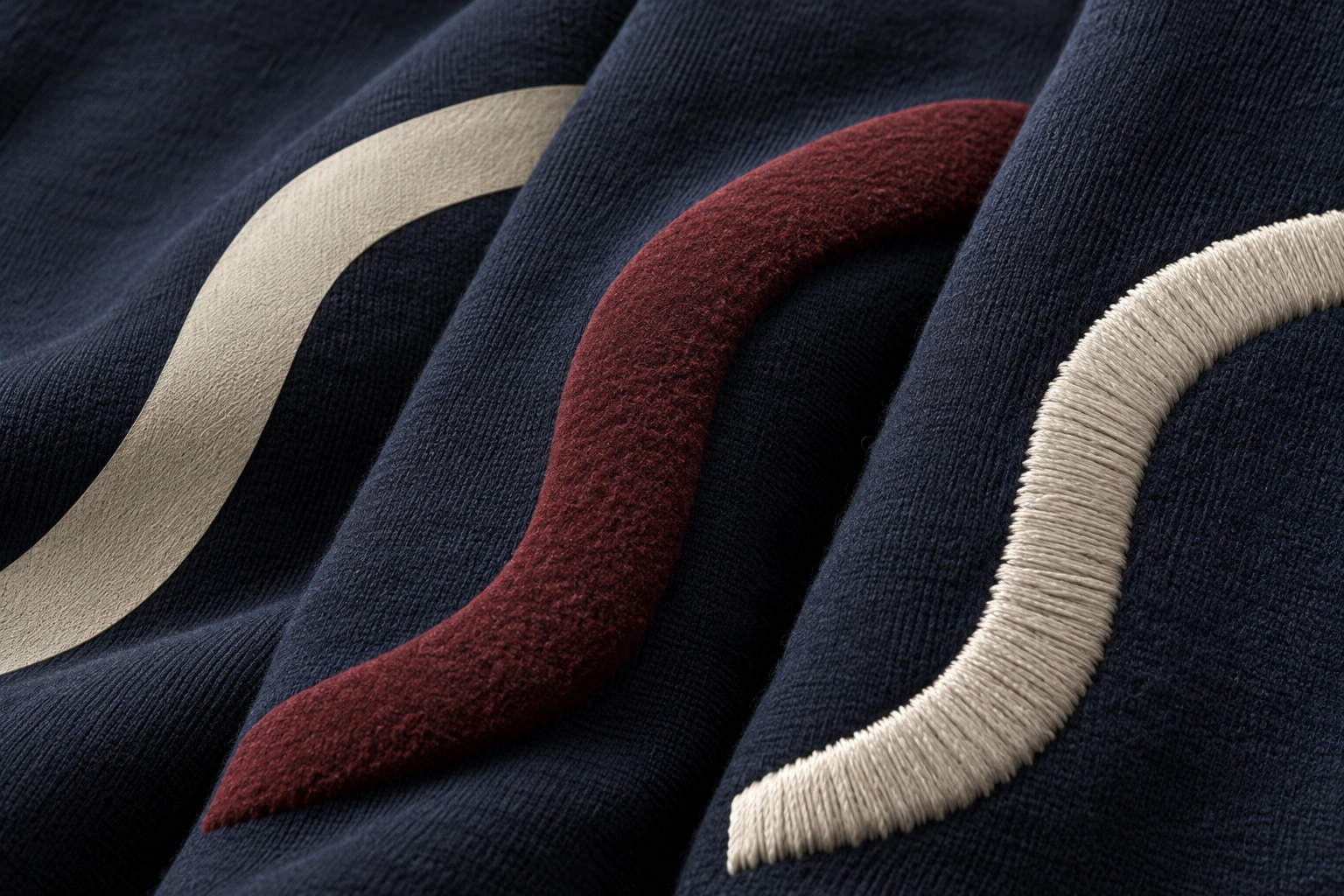
If the design includes a large graphic or embroidery, evaluate that treatment on the proposed fabric. A plain swatch cannot show how the finished artwork will affect the chest, back or sleeve.
Include washing in the approval discussion
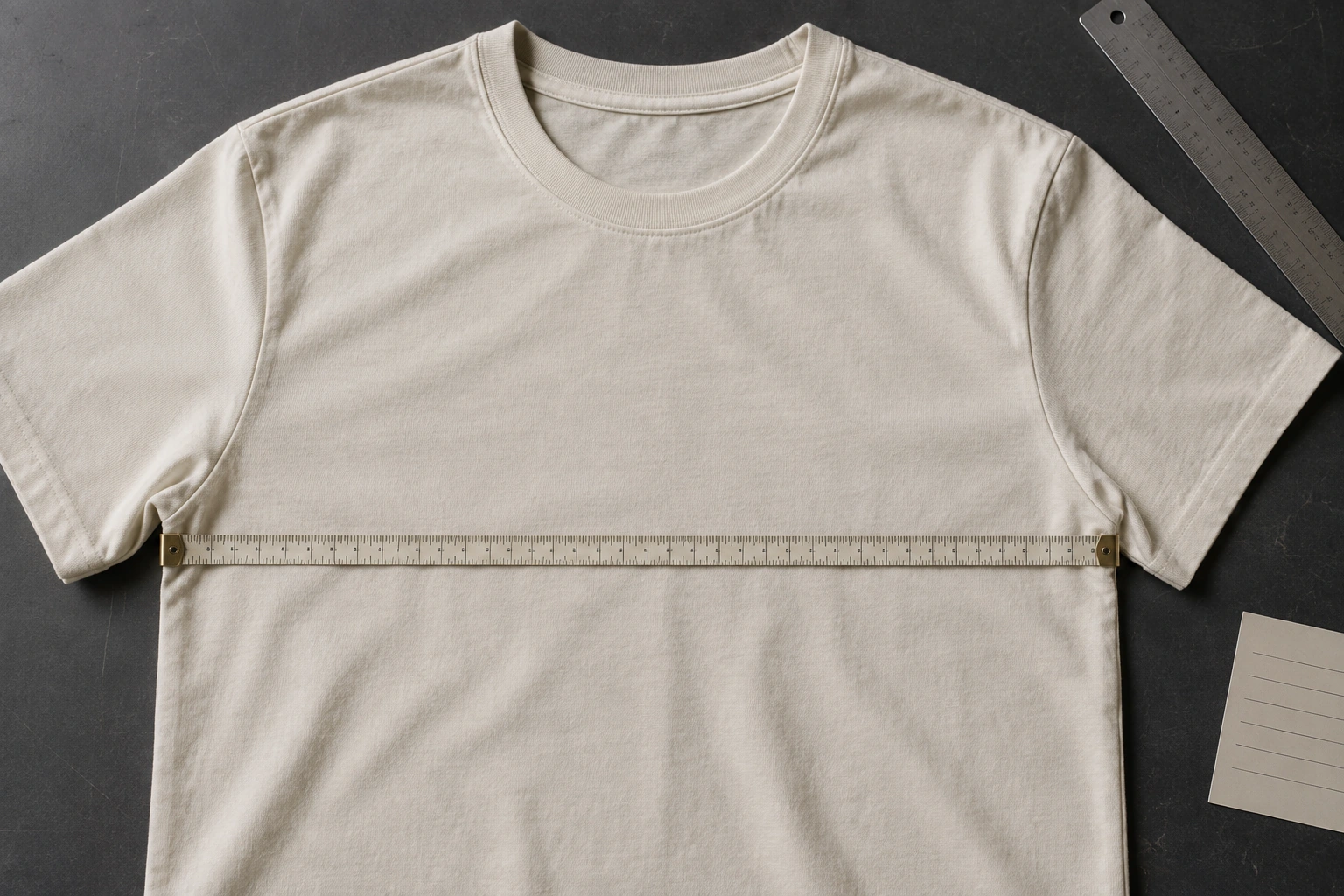
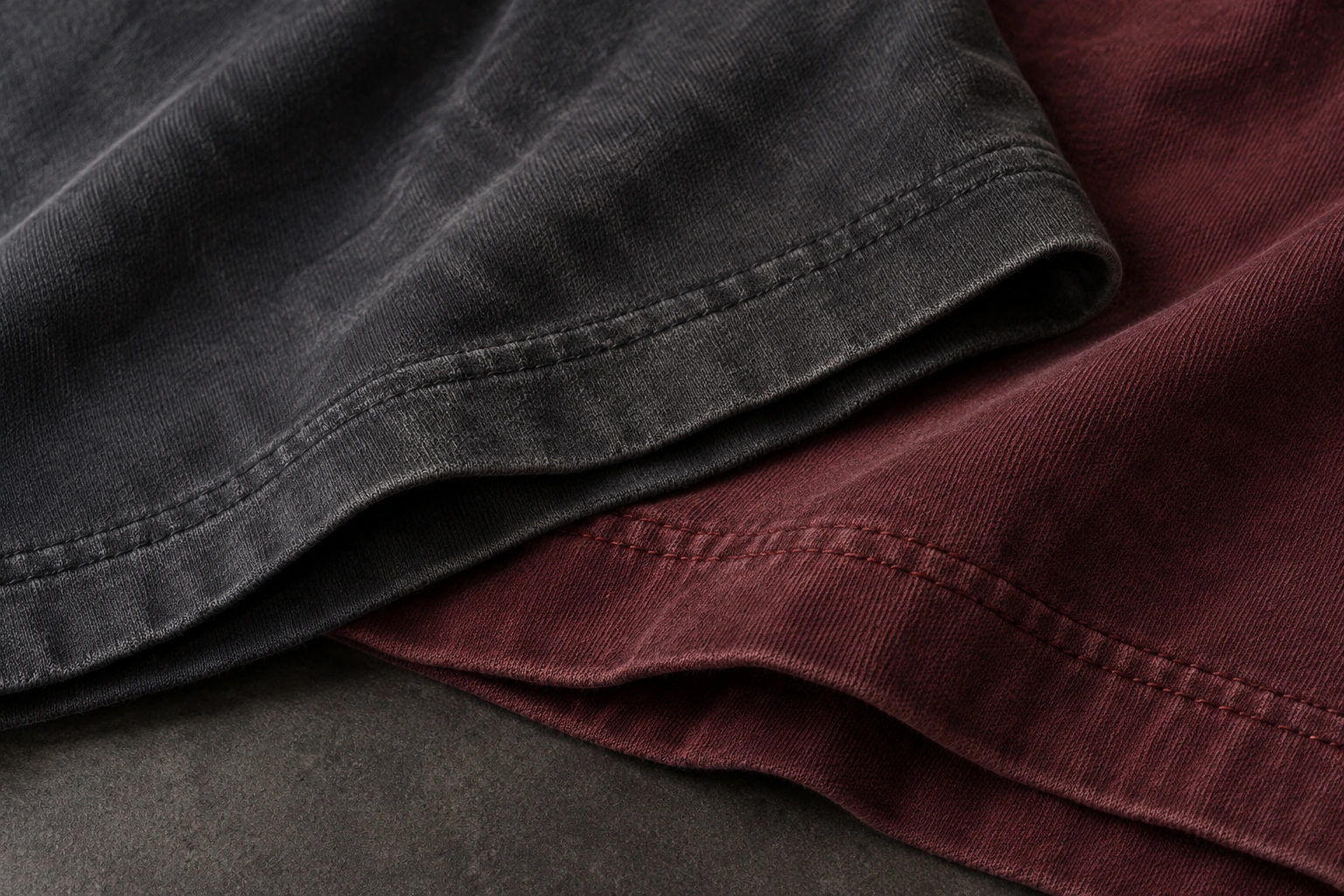
Agree the intended care conditions and which sample will be used for review. Record measurements before and after, then compare length, width, seam position, neckline and decoration. Keep the unwashed reference identifiable.
A development wash check can reveal issues; it is not automatically a laboratory test. If your buying specification requires standardized dimensional testing, distinguish fabric testing under AATCC TM135 from an appropriate garment test, and agree the method and acceptance criteria with the relevant parties. Do not accept “pre-shrunk” as a substitute for a measurable requirement.
Send a brief that supports a useful quotation
Include your style drawing or reference, sample size, measurement sheet, preferred composition, fabric reference, colors, artwork dimensions and placements. Add intended quantities by style and color, labels, packaging and your target schedule. Mark undecided items clearly so alternative fabrics can be compared against the same goal.
If your collection has a specific material credential requirement, name it separately and ask what documentation would apply to the proposed fabric. “Cotton” and “heavyweight” do not by themselves establish an environmental claim.
Example: turn three fabric options into one decision
Use a short decision sheet when several fabrics look promising. Begin with one non-negotiable design requirement and two preferences. A non-negotiable requirement must be demonstrated in the proposed garment; it should not disappear inside an average score. Keep commercial information beside the physical review so the chosen swatch can be connected to a quotation.
The example below is a buyer’s working template, not a comparison of SALATI fabrics. Replace each observation with your own sample findings. An option can remain under consideration while a specific question is unresolved. Record who will obtain the missing information and what evidence would close the question.
Once you select a direction, keep the rejected alternatives with their reasons. If the preferred material later becomes unavailable, that record makes it easier to assess a substitute without restarting the entire design discussion. Ask for a revised sample or quotation wherever the substitute changes the agreed garment.
| Candidate | Illustrative review note | Next decision |
|---|---|---|
| Fabric A | Desired body structure; collar combination unresolved | Review the proposed rib on a garment |
| Fabric B | Comfort accepted; silhouette outside the brief | Revise the direction or remove from shortlist |
| Fabric C | Sample direction accepted; quotation uses another reference | Resolve the reference mismatch before selection |
Common questions
What is the best GSM for a heavyweight tee?
There is no single answer for every silhouette and customer. Compare finished swatches and a garment in your intended fit before selecting the weight.
Can I use a favorite T-shirt as a reference?
Yes. Identify what to keep and what to change, then translate the decision into measurements and material requirements.
What should I discuss with SALATI first?
Share the garment direction and intended quantities, then work through fabric, fit and decoration. SALATI can begin development from a tech pack, sketch, reference image or physical sample; material availability, MOQ, fees and timing are confirmed for the project.
Bring the details to SALATI.
Share your reference, planned quantity and the decisions you would like help with.
Discuss your projectThis guide explains development decisions. Confirm fabric availability, specifications, minimum quantities, fees and delivery terms for your individual project with SALATI.