Quick answer
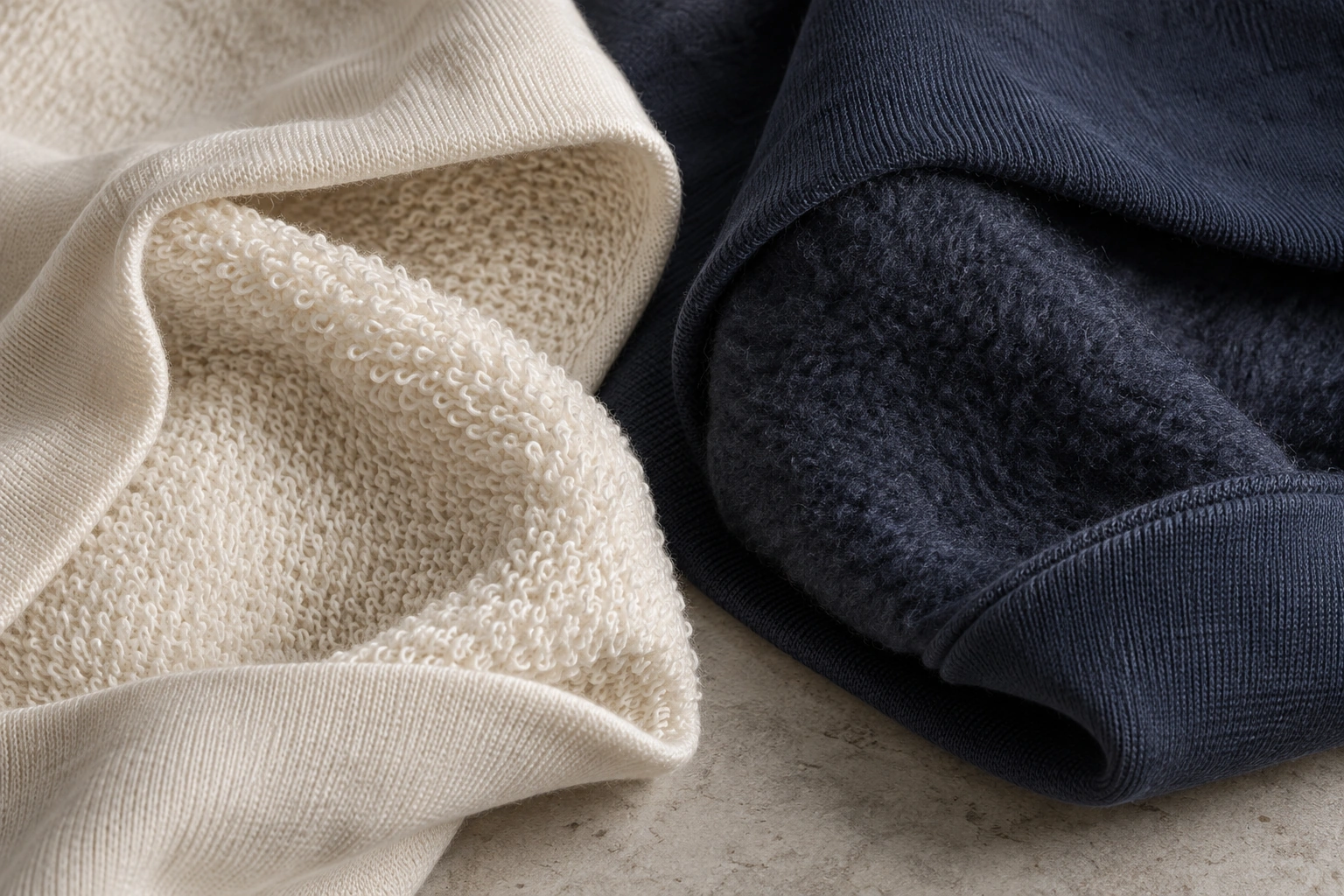
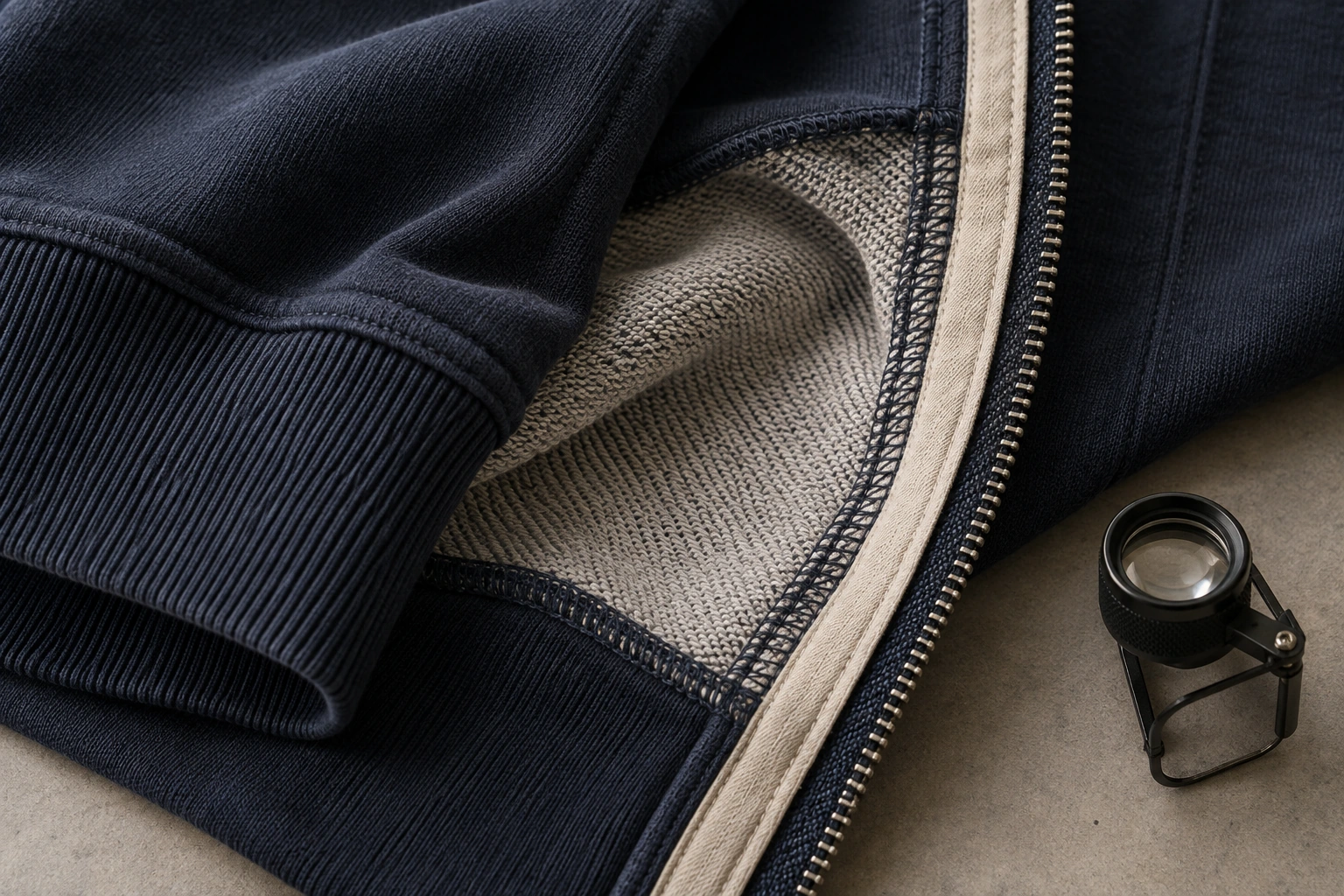
For sweatshirt fabrics, begin with the inside surface: French terry has a looped reverse, while brushed sweatshirt fleece has a raised, fuzzy reverse. Choose between them by comparing the actual handfeel, weight and garment construction you need. Neither name tells you the exact fiber composition, fit or finished performance.
Define the fabric before comparing it
In this guide, “fleece” means brushed sweatshirt fleece used for hoodies and sets. The word also appears on other fabric types, so a quotation should identify the construction rather than use “fleece” alone.
Ask for clear photographs of both sides and a physical swatch. Madeira’s fabric descriptions distinguish French terry’s smooth and looped surfaces from fleece’s napped surface. That visible difference is a useful first check, but a photograph cannot replace handling the material.
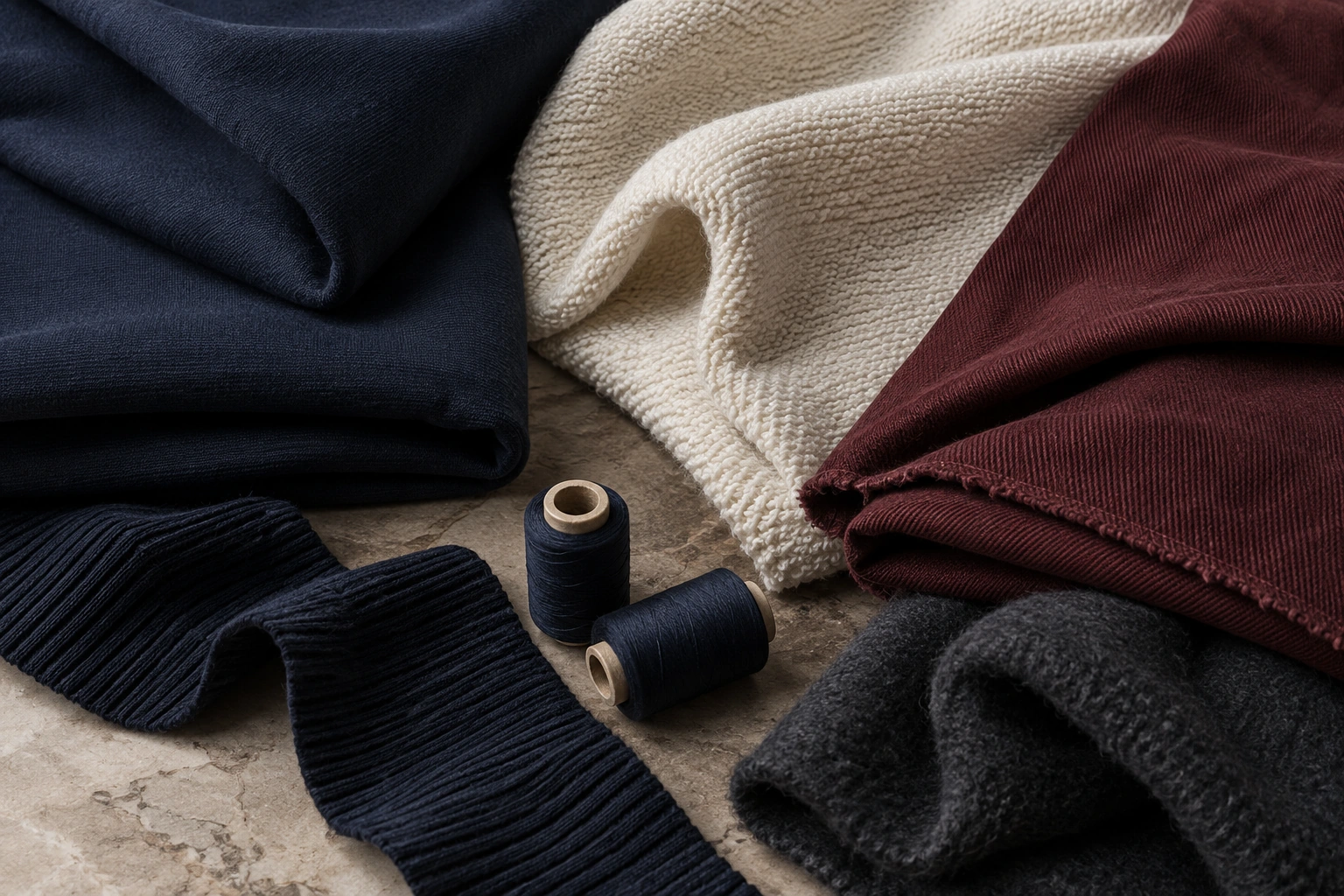
Write composition on a separate line. “French terry” is not another way of saying “100% cotton,” and “fleece” does not automatically mean polyester. SALATI’s submitted hoodie and set ranges include French terry, cotton and cotton-polyester fleece directions; the exact material remains a project decision.
Compare the details that affect your hoodie
Use the table with samples in front of you. It deliberately avoids assigning universal winners for warmth, durability or cost. Those decisions require a defined fabric and garment, not two generic names.
| Decision | French terry review | Brushed fleece review |
|---|---|---|
| Interior | Examine loop character and comfort against skin | Examine the raised surface and comfort against skin |
| Handfeel | Assess drape and structure in the proposed weight | Assess drape, structure and the feel of the brushed reverse |
| Hood and pockets | Review layered areas in the actual construction | Review layered areas in the actual construction |
| Rib and trims | Compare color, stretch and finished proportions | Compare color, stretch and finished proportions |
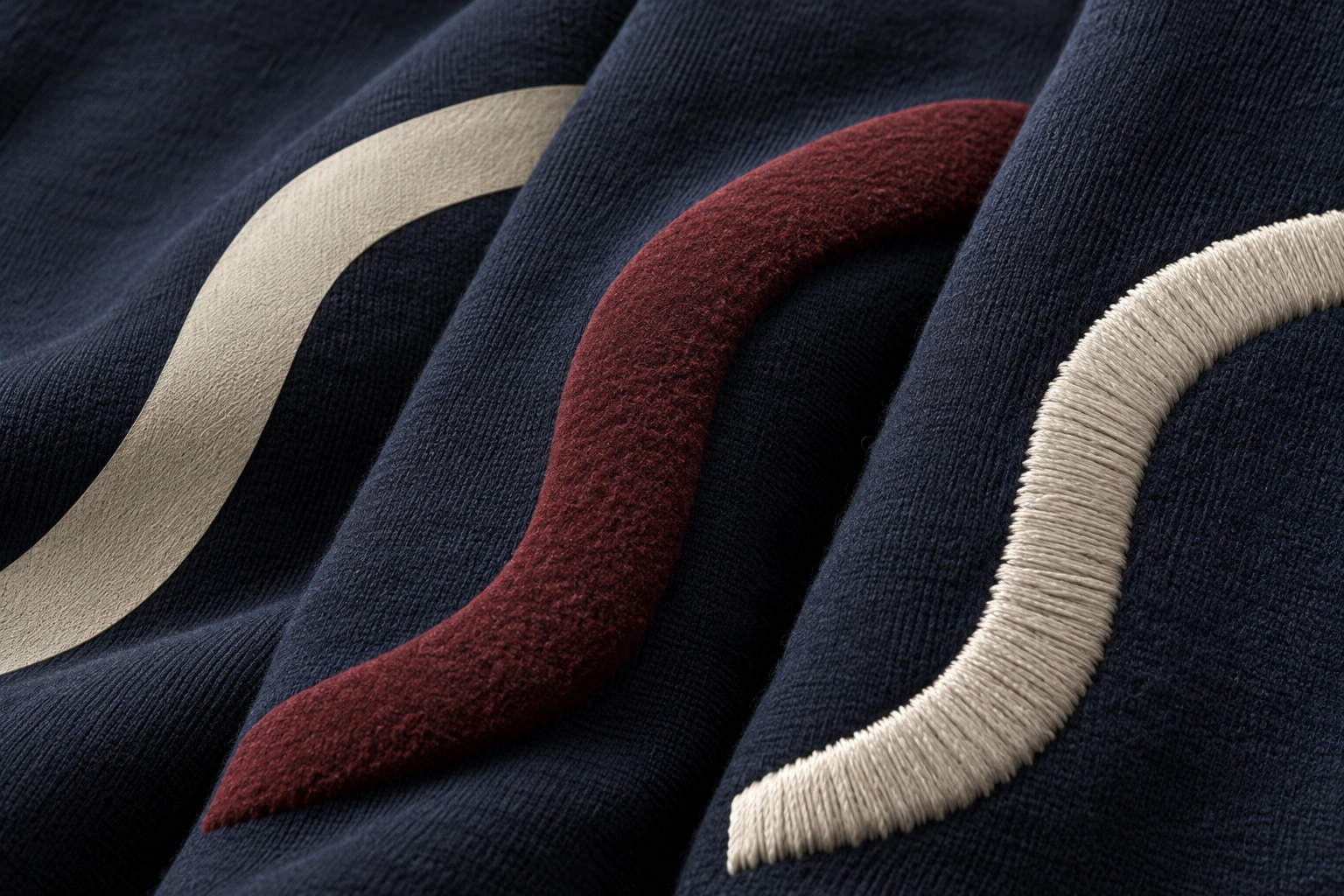
| Decoration | Test the chosen artwork on the proposed material | Test the chosen artwork on the proposed material |
| After washing | Record dimensions and surface appearance | Record dimensions and surface appearance |
Consider season and layering without relying on labels
Describe the wearing conditions and the customer’s expectations. Do you want an indoor layer, a substantial outer hoodie or a coordinated travel set? Should it sit easily beneath a jacket, or provide a more structured outline when worn alone?
Ask to compare suitable candidates at known finished weights. If one sample is much heavier or has a different composition, note that difference before attributing everything you feel to the reverse surface. A meaningful comparison keeps track of the variables that changed.
For a warm, soft interior, begin by evaluating brushed fleece candidates. For a visible loopback interior, begin with French terry. Then judge comfort and appearance on the intended wearer. These are starting points for sampling, not performance guarantees.
Build the hood, pocket and rib into the decision
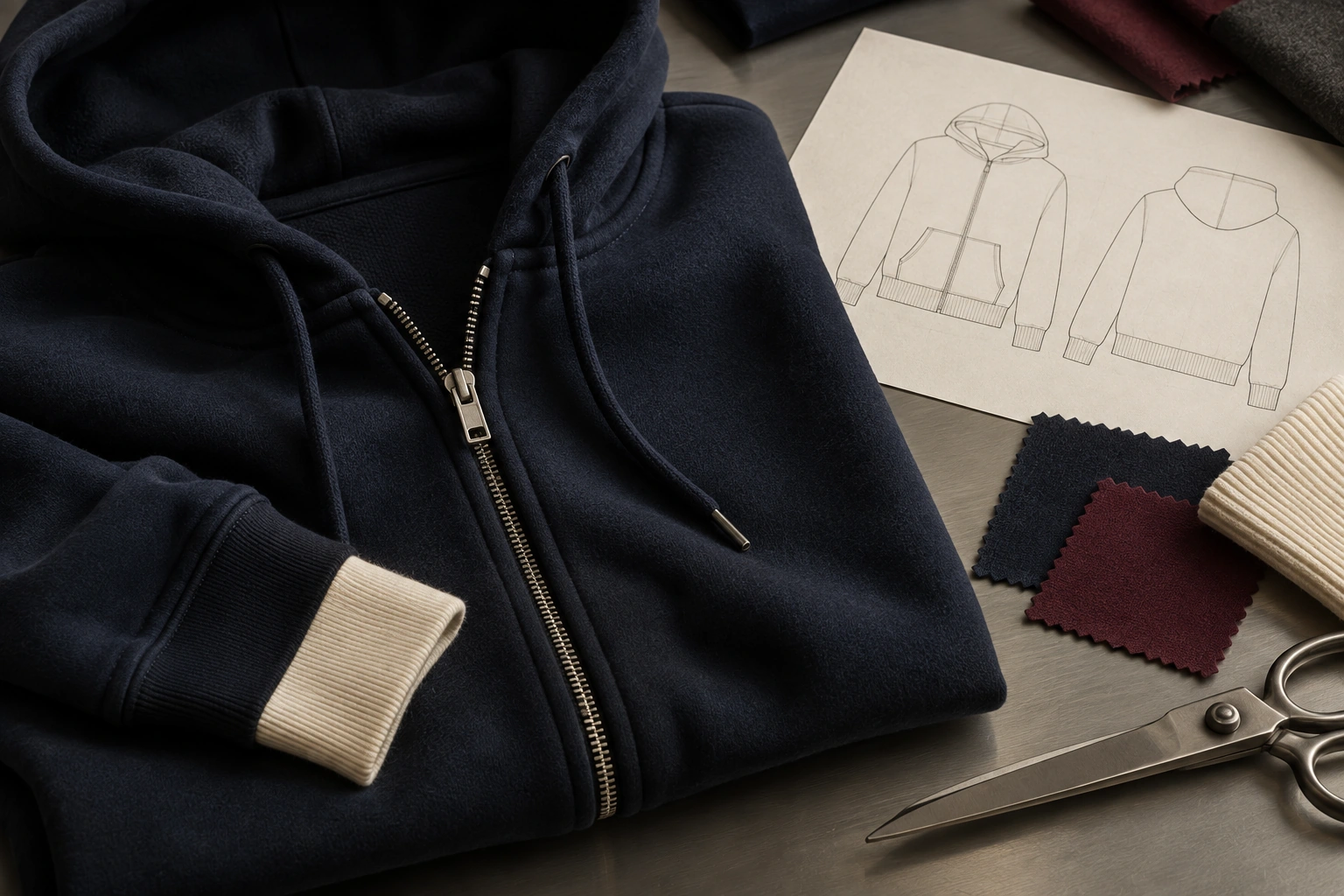
Do not approve a hoodie fabric using only a small flat swatch. Review the hood up and down, the neck opening, the pocket and the cuffs on a complete garment. Decide whether the hood uses one layer, a second body-fabric layer or a separate lining, and record that construction.
For a matching set, check the top and bottom together. Compare shade, handfeel and how each piece hangs. A shared fabric name does not define the relationship between a wide hoodie body and a tapered or flared trouser.
Ask for any substituted sample materials to be identified. If a first sample uses a temporary rib or zipper, approve only the features that sample can actually demonstrate.
Review care, decoration and sourcing requirements
Agree a wash review for the proposed care instructions. Photograph the inside and outside before washing and compare dimensions, seams, rib and surface afterward. Include decoration in that review when it is part of the finished style.
If a specific laboratory report is required, identify the property, method, specimen and acceptance criteria before ordering the test. A soft first impression is not evidence of pilling resistance, colorfastness or dimensional stability.
Keep environmental requirements separate from the construction choice. Ask for the exact fiber content and documents relevant to any claim you plan to make. A loopback or brushed finish alone does not establish recycled content, organic status or lower environmental impact.
Example: approve a matching set as two connected garments
A matching set needs a purchasing record that connects the hoodie and pants without merging their separate requirements. Give each piece a style code, then identify the set they belong to. Record the proposed body fabric and rib references for each piece. Where the materials differ, describe whether that difference is intentional and which visual relationship should be preserved.
Use the template below during the same review session. It is an example of how to organize a decision, not a SALATI material specification. Keeping a top and bottom together in the photographs helps reviewers see the complete outfit, while separate notes prevent approval of one piece from being interpreted as approval of the other.
Before accepting the quotation, check its unit against this record. State whether the requested quantity means complete paired sets or independently ordered garments. If customers can mix sizes, include the top and bottom allocation separately. Ask how any revised allocation affects the proposal before treating it as agreed.
| Record | Top | Bottom |
|---|---|---|
| Material identity | Body and rib reference | Body and waistband reference |
| Appearance decision | Approved, revise or open | Approved, revise or open |
| Ordering unit | Quantity by size and color | Quantity by size and color |
Common questions
Is French terry always lighter than fleece?
No universal weight follows from either name. Compare the proposed fabrics’ finished specifications rather than a generic weight chart.
Can either work for a matching set?
Both appear as development directions in SALATI’s hoodie-set range. The fit, material, color, trims and finish should be reviewed as a complete set.
What should I send with an inquiry?
Include the silhouette, wearing season, preferred inside surface, fabric reference, colors, artwork and intended quantities. SALATI can review the material direction alongside hood shape, pockets, fit and branding. Confirm availability, MOQ and the development schedule for the exact design.
Bring the details to SALATI.
Share your reference, planned quantity and the decisions you would like help with.
Discuss your projectThis guide explains development decisions. Confirm fabric availability, specifications, minimum quantities, fees and delivery terms for your individual project with SALATI.