Quick answer
Review a first clothing sample against a written brief, then separate what is approved, what needs revision and what has not yet been demonstrated. Measure it, fit it on the intended wearer, inspect construction and decoration, and return one consolidated feedback record. A first sample is a development decision point; production approval should be explicit.
Identify what this sample represents
Before opening a feedback document, confirm the style code, sample version, size and purpose. List the specification and artwork versions it follows. Ask whether the fabric, color, rib, zipper, labels or other trims differ from the intended production materials.
A sample made to check fit may not establish final color or decoration. Record those limits at the start so an approval cannot be misunderstood. Keep the sample label, photographs and comments connected to the same version.
SALATI’s stated development sequence includes brief review, material and technique confirmation, quotation, pattern development, sample making, customer review and an approved reference before production planning. Use each review to resolve specific decisions within that sequence.
Measure before you discuss the fit
Lay the garment consistently and follow the agreed measurement method. Record actual measurements beside the specification, including the points most important to your design. For a hoodie, these might include chest, body length, shoulder, sleeve, cuff, hem and hood dimensions.
Keep measurement accuracy separate from design preference. A sample may match the specification while revealing that the intended silhouette needs to change. Write “revise the specification” when the target changes, rather than calling every disliked dimension a manufacturing error.
Use an agreed tolerance where one exists. If it has not been set, flag it as an open production requirement instead of inventing a general tolerance for every measurement.
Review the garment in a consistent order
Photograph the complete garment before taking close-ups. Use arrows and reference numbers to connect each detail photograph to a comment. Keep lighting and camera position reasonably consistent between sample rounds so visual comparisons remain useful.
| Checkpoint | Shared reference | What to record |
|---|---|---|
| Material | Identified fabric and color reference | Actual material, substitutions and decisions still open |
| Measurements | Measurement sheet and method | Target, actual measurement and requested action |
| Fit | Intended wearer and silhouette reference | Front, side and back observations; movement concerns |
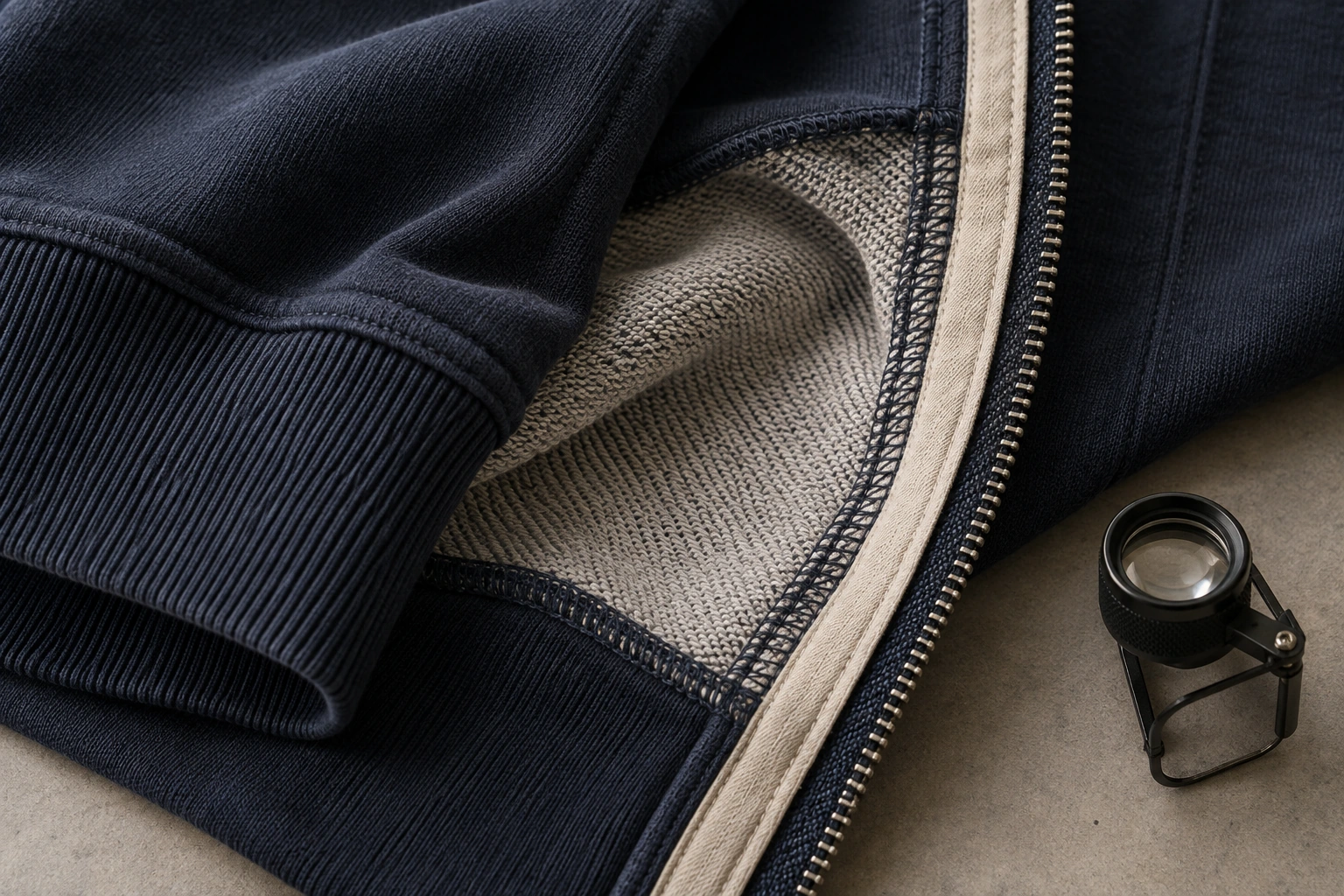
| Construction | Technical drawing and specified details | Seam, pocket, closure and finishing observations |
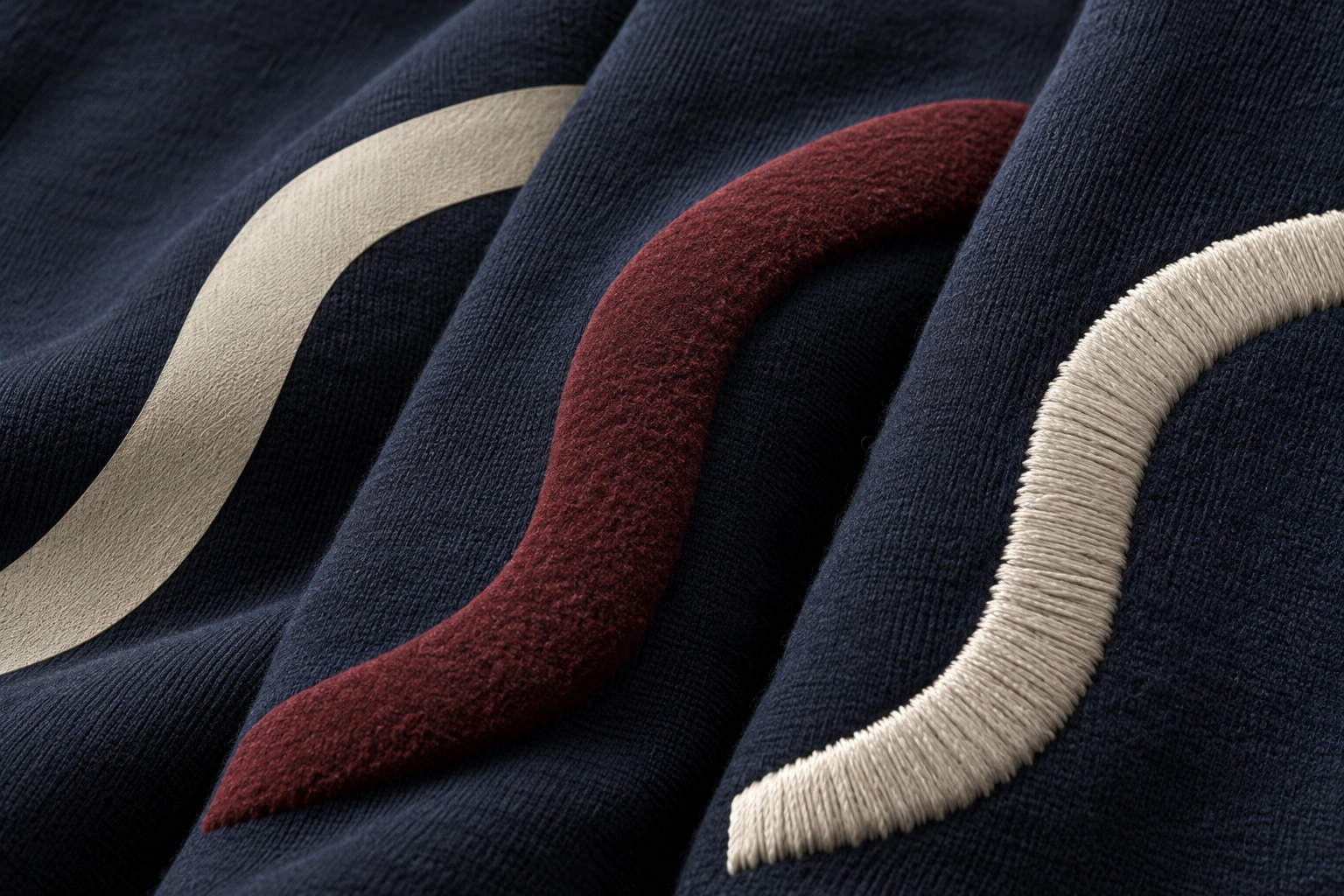
| Decoration | Approved artwork, dimensions and position | Scale, placement, color and surface comments |
| Labels and packing | Agreed artwork and packing instructions | Placement, legibility, missing items and required revisions |
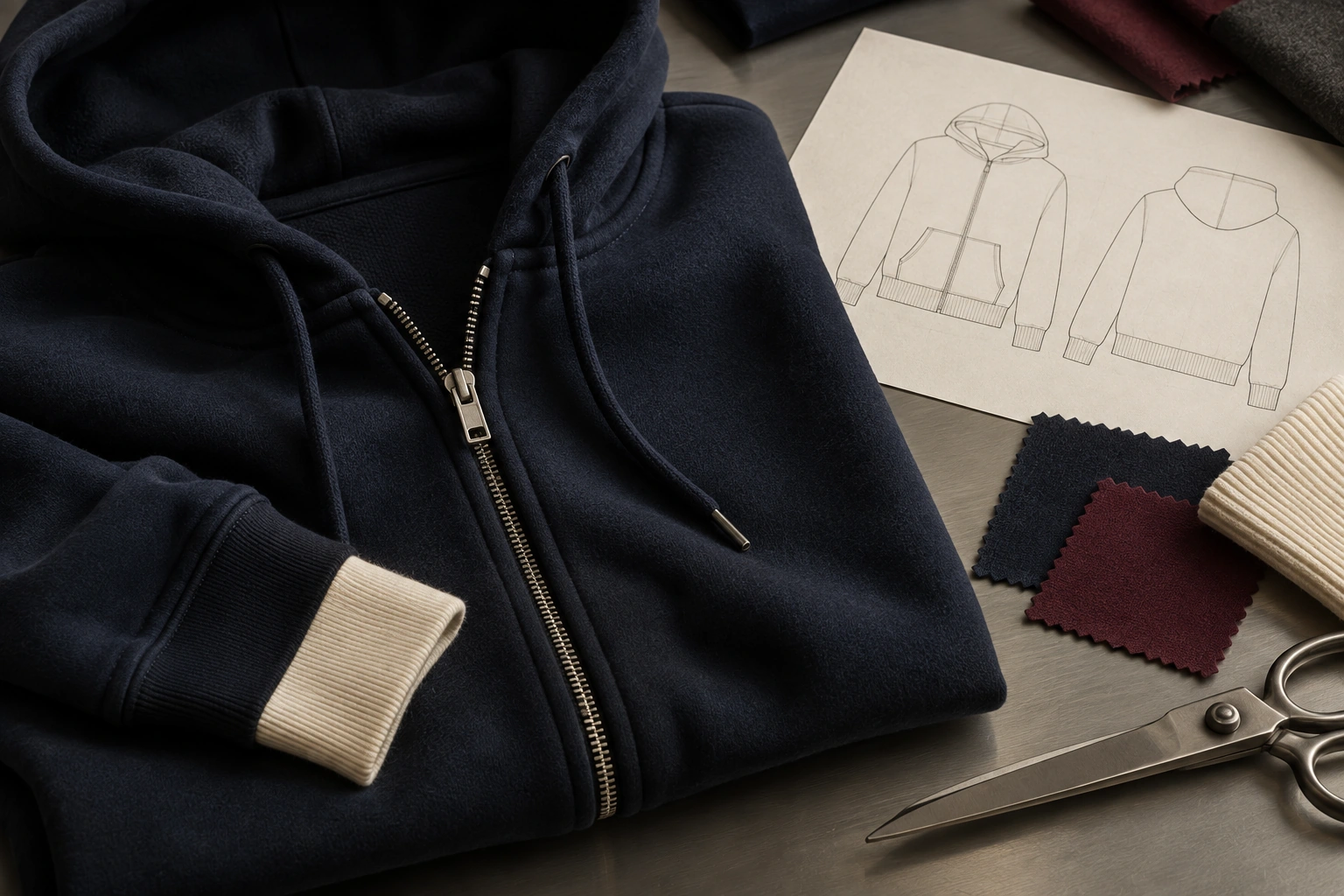
Fit it as the customer will wear it
Use a wearer whose measurements relate to the intended sample size. Record those measurements and any layers worn underneath. Ask the wearer to sit, reach and move normally, then check the garment again at rest.
Look at the relationship between parts: shoulder and sleeve, hood and neckline, pocket and body length, or trouser rise and waistband. Avoid adjusting one measurement without considering the silhouette it belongs to. For a set, review both pieces together as well as separately.
A first sample in one size does not demonstrate every size in the proposed range. Agree how remaining sizes and grading will be reviewed before treating the size range as approved.
Agree any wash or performance review
Confirm the intended care conditions and the specimen to be reviewed. Record the garment before and after, including dimensions, seams, surface and decoration. Keep the conditions with the results so a later comparison has context.
For formal dimensional testing, AATCC TM150 addresses garments after home laundering and notes limits for certain stretch fabrics. The appropriate method, scope and acceptance criteria should be agreed for the product. An informal development check should not be described as a laboratory pass.
Return one clear decision record
Group comments by material, fit, construction, decoration and finishing. Give each comment a reference, an observation and the required next action. Distinguish a correction from a new design request, and identify any change that needs another quotation or timing discussion.
For example: “Pocket position is approved. Revise the pocket opening to the dimension marked on drawing B and check hand access in the next sample.” This keeps the approved feature and the requested change clear.
End with a written status: revise and resubmit, approved for a defined next step, or approved as the production reference. List unresolved points and attach the correct specification version. Production authorization should not depend on an ambiguous message such as “looks good.”
From the brief to the workroom
Example: write an approval that cannot be misread
Use separate status fields for the sample and for the next permitted action. This prevents a positive fit comment from becoming an unintended instruction to start production. The decision should identify the sample, specification revision, reviewer and date, then state what evidence is still required.
The following example is a drafting aid, not a real SALATI approval or an agreed production release. A buyer has accepted the body fit but still needs to review revised artwork and the intended label. The overall status remains open even though a useful part of the sample has been accepted. Replace these observations with the actual findings for your garment.
Keep a copy of the issued decision beside the sample photographs. When the next evidence arrives, close each open item explicitly and identify any replacement files. If the new work affects an already accepted feature, reopen that feature for review. Approval should describe the current complete reference, not depend on readers reconstructing several rounds of chat messages.
| Field | Illustrative entry |
|---|---|
| Accepted | Body fit of sample A, against specification revision B |
| Still open | Artwork position and final main label |
| Next action | Provide the revised evidence for buyer review |
| Production status | Production release has not been given |
Common questions
How many revisions are included?
Confirm the sampling quotation and revision scope for your project. Do not assume unlimited rounds or an automatic sample-fee credit.
What should I send SALATI?
Send the sample identifier, measurement record, annotated photographs and consolidated comments. Agree the next sample’s purpose, materials, fees and schedule, then identify the approved sample and documents that will guide production.
Bring the details to SALATI.
Share your reference, planned quantity and the decisions you would like help with.
Discuss your projectThis guide explains development decisions. Confirm fabric availability, specifications, minimum quantities, fees and delivery terms for your individual project with SALATI.