On the first day on the production floor, a stack of blank, heavyweight T-shirt fabric rolls caught my attention. These were about to be transformed into oversized T-shirts, a staple of streetwear culture. This week's task was to examine the subtleties that bring these garments to life—from the precise cutting of patterns to their finishing touches. Scaling up from an individual piece to a batch felt like an orchestration of precision and creativity. Watching the fabric develop into fully-formed garments kept the importance of every stitch, hem, and inspection step top of mind. How does each detail contribute to the final product? Let's follow this week’s journey of transforming raw fabric into wearable art.
Starting with Fabric Sourcing
In the world of oversized T-shirts, choosing the right fabric is crucial. The primary fabrics often include cotton, polyester blends, and jersey — each offering unique properties to the garment. The choice hinges on key characteristics such as softness, breathability, and durability. For example, pure cotton is preferred for its softness and breathability, making it a staple for comfortable daily wear. Blends, like polyester-cotton, introduce additional benefits such as increased durability and wrinkle resistance.
Fabric weight and GSM. A critical parameter in fabric selection is the GSM (Grams per Square Meter). Heavyweight T-shirts typically range from 180 to 220 GSM, which provides a substantial feel without compromising comfort. A higher GSM implies a thicker and potentially more durable garment, crucial for achieving the desired 'oversized' look without sagging.
Softness and durability. While GSM sets the base for durability, it is the finish and fiber quality that dictate softness. Buyers often seek a balance: a fabric that withstands washes yet remains gentle on the skin. This subtle interplay influences not only the tactile experience but also the garment's longevity.
Ethical sourcing. At SALATI, ethical sourcing practices are non-negotiable, aligning with certifications like Global Recycled Standard (GRS) and Business Social Compliance Initiative (BSCI). These certifications ensure materials are produced responsibly and workers are treated fairly. Adhering to such standards reassures buyers of ethical quality, a growing consumer demand.
However, receiving and inspecting fabric material poses its challenges. Each roll must be meticulously checked for consistency in color, texture, and weight to avoid defects like dye inconsistencies or weakened fibers that can compromise the final product. Without thorough inspection protocols, an entire batch could risk rejection, impacting both timelines and costs.
For a detailed exploration of fabric options, see our guide on Oversized T-Shirts: Choosing the Right Fabrics.
Pattern Making and Cutting Processes
Precision patterns. In the journey of creating oversized T-shirts, pattern making is a critical stage that dictates the overall fit and drape of the garment. The process begins by drafting a pattern based on the design specifications, often starting from a basic block pattern and then adjusting for the oversized dimensions specific to each order. This involves considering the desired loose fit and ensuring that sleeve and body lengths accommodate the oversized style while maintaining proportionality.
Layered accuracy. When it comes to cutting, ensuring precision across multiple layers of fabric is essential. Techniques such as stacking fabric in manageable quantities help maintain accuracy, as do using markers that guide the blade along the fabric's contours. The aim is to avoid any misalignment that could disrupt the symmetry of oversized garments, especially since even small discrepancies can be more noticeable in larger T-shirts.
Tools of the trade. Equipment plays a pivotal role in both pattern making and cutting. Pattern making often uses CAD systems to translate hand-drawn designs into digital templates, facilitating modifications and ensuring consistent results. For cutting, industrial fabric cutters equipped with sharp rotary blades or laser precision are employed to slice through thick stacks of fabric efficiently and accurately. This machinery not only speeds up the process but also enhances the precision necessary for maintaining the intended oversized silhouette.
Impact of size. Oversized fits require a careful reconsideration of pattern dimensions. The relaxed fit needs more material, impacting the pattern layout to avoid fabric wastage while ensuring the T-shirt maintains its desired flow and shape. Special attention is given to shoulder seams and armhole depth to preserve the balance and proportion these garments require.
Custom challenges. Custom order pattern making introduces unique challenges, such as accommodating specific client requests for design adjustments. Variations between production runs can occur due to these bespoke modifications. Consistency is important in custom orders; clients should ensure specifications are clear and ask suppliers how they handle these variations to align with the original design intent.
Sewing and Assembly
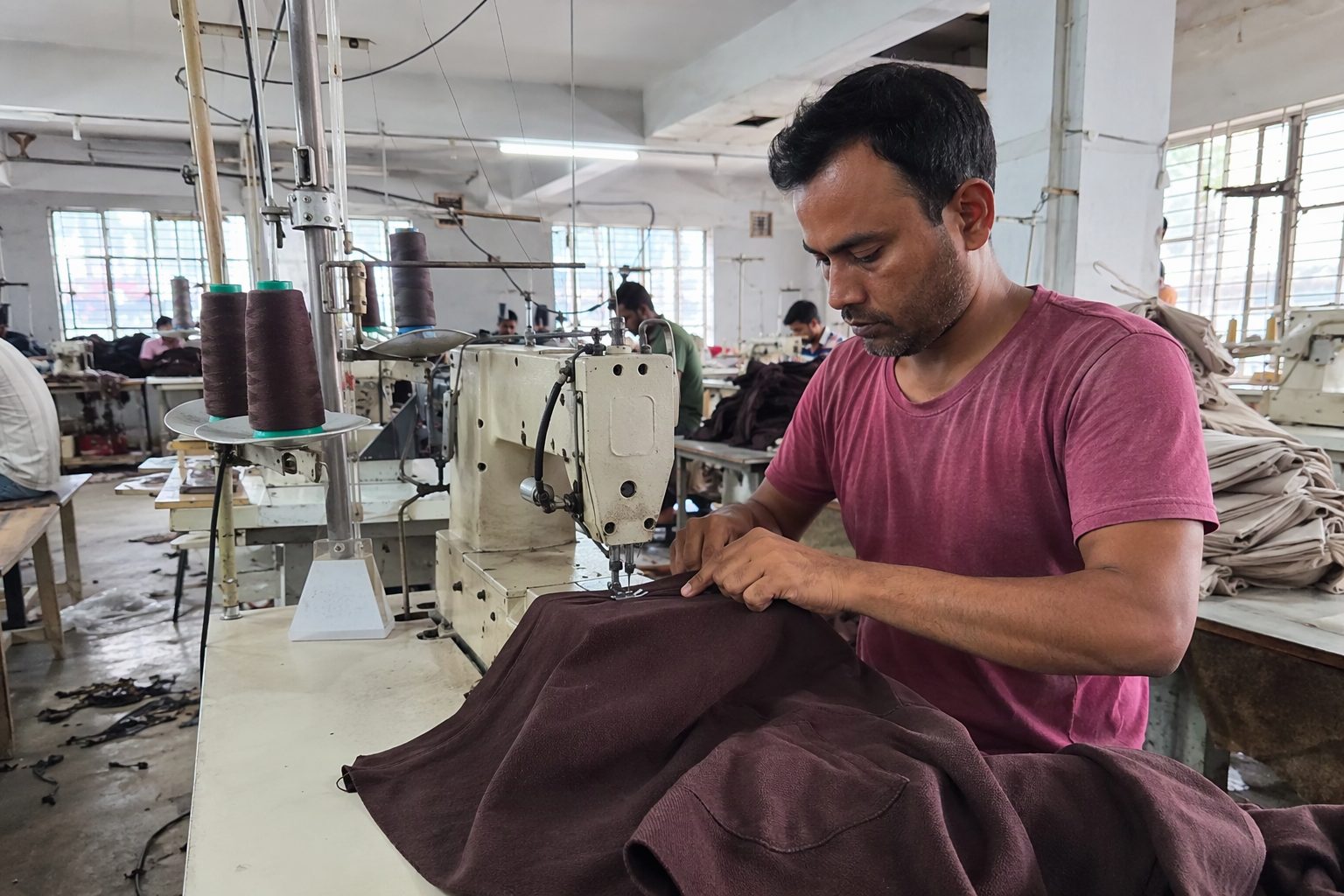
The sewing and assembly process of oversized T-shirts involves specific techniques honed for durability and fit. Overlock and cover stitch are pivotal for these garments, ensuring the seams stretch without breaking and lay flat for the desired oversized fit. The overlock stitch, in particular, is invaluable for its ability to bind the edges, preventing fraying while accommodating the fabric's stretch. The cover stitch, predominantly used for hems, adds a professional finish with its dual lines of stitching visible on the outside and a looper stitch on the inside for additional strength.
Seam strength and alignment are critical in oversized T-shirt production. Weak or misaligned seams can lead to unsightly puckering or, worse, garment failure during wear. To maintain seam integrity, each piece is checked during the process to ensure that both sides are perfectly aligned before stitching. This is crucial, as oversized designs often involve generous fabric allowances that can distort if not handled properly.
Managing size variations across production batches requires sharp attention to both pattern and cutting precision. Any minor discrepancy in sizing can lead to significant fit issues, especially noticeable in oversized styles where drape and movement are more pronounced. Implementing stringent measurement checks during assembly helps maintain uniformity across an entire batch.
During quality checks, common sewing defects such as skipped stitches, uneven tension, and thread breaks are meticulously scrutinized. These issues, if found, are promptly addressed by re-evaluating machine settings and recalibrating tensions. Continuous operator training and machine maintenance schedules are vital in ensuring these defects are minimized, thereby delivering the handcrafted quality expected in retail settings.
Adding Design Elements: Printing and Embroidery
Types of Prints. Screen printing and digital printing stand out for oversized T-shirts. Screen printing is valued for its durability and vivid color results, ideal for larger motifs. Digital printing, on the other hand, offers high detail and flexibility in color choice, perfect for intricate designs or small-batch runs.
Embroidery Techniques. Embroidery adds texture and depth, often used on necklines and pocket areas. Techniques include standard flat embroidery for its clear and classic look, and 3D puff embroidery for eye-catching dimension.
Influence on Production Time and Cost. Designing with these elements affects timeframes and budgets. Screen printing, with its setup requirements, typically lengthens production time, especially for multicolor designs. Digital printing reduces setup time but may come at a higher initial cost for smaller quantities. Embroidery can be labor-intensive, increasing both time and costs significantly compared to prints.
Garment Decoration Standards. Adhering to social compliance certifications such as WRAP supports ethical production practices. These standards not only appeal to increasingly conscientious consumers but also stabilize the quality and consistency of the final product.
Color and Motif Selection. The process of choosing colors and motifs involves aligning aesthetic goals with brand identity. Vibrant colors and bold motifs can capture consumer attention, but they must also harmonize with fabric, especially for designs spanning entire oversized tees.
Comparison of Design Techniques
| Design Technique | Best for | Trade-off | Time Impact | Cost Factor |
|---|---|---|---|---|
| Screen Printing | Bold designs, vibrant colors | Longer setup time | High | Moderate |
| Digital Printing | Intricate details, small batches | Higher unit cost | Low | Higher |
| Flat Embroidery | Classic looks | Limited color use | Medium | Medium |
| 3D Puff Embroidery | Tactile and eye-catching | Higher production complexity | High | High |
Each method carries its unique advantages and limitations, with choices dependent on both design vision and cost strategies.
Quality Inspection and Finishing Touches
Ensuring the integrity of each oversized T-shirt from stitch to the last thread requires rigorous quality control measures. Stitch integrity and print quality are fundamental to this process. Inline inspection stages monitor stitching for alignment and tension consistency, ensuring seams can withstand the expected wear and tear. Each piece is checked for overlock and cover stitch accuracy, working to eliminate common sewing defects before they proceed down the line.
Moving forward, meeting client specifications and adherence to standards like WRAP is paramount. WRAP ensures ethical and responsible manufacturing practices are upheld, a critical selling point for brands focusing on transparency and sustainability. Inspectors verify that prints align with the approved designs—not just in color, but in placement and durability, using fabric tension and heat tests to ensure long-lasting applications.
The sequence of inspections culminates at the end-line stage, where the overall construction is reviewed. This involves spot checks for stitch stability, fabric quality, and print adherence to client-specific requirements. After final inspection, each garment moves to finishing stages, gaining its final touch with processes like garment washing. Washing not only helps in achieving the desired softness and shrinkage rate but also ensures that no residues from printing or sewing processes remain.
Next, labeling and packing round off the process. Labels, containing essential information, are sewn with precision to avoid scratchy uncomfortable results. Following labeling, the garments undergo a rigorous packing stage where they are boxed with precision, ensuring no movement within packaging to avoid creasing. This step prepares the T-shirts for shipment.
For more insights into how quality is embedded into each oversized T-shirt, see Oversized and Heavyweight T-Shirts: Quality Design.
The packing list and batch numbers ensure traceability, enabling quick response in case of any post-shipment issues. Through this meticulous process, SALATI maintains the integrity and quality clients demand from their oversized T-shirts.
Reflecting on Production Choices
Client feedback guides enhancements. It's advisable for buyers to engage in discussions with their manufacturers about potential adjustments in design or materials. For instance, a suggestion for softer seams can lead to a reevaluation of thread choices, such as opting for a finer, more flexible option that enhances both comfort and durability without sacrificing seam strength. Such tweaks are typical and can be requested to ensure ongoing improvements aligned with client insights.
Revisiting material choices. Based on the outcomes of previous projects, we occasionally revisit material choices. This might involve switching to a more stretchable cotton blend for enhancing the fit and comfort of oversized T-shirts, particularly when they are meant to accommodate a broad range of sizes. These adjustments ensure that the product not only meets but exceeds client expectations upon first wear.
Conscious choices remain unchanged. While improvement is a constant goal, there are production methods we choose to keep unchanged due to their proven success. One such decision pertains to our traditional stitching technique, which, thanks to its historical reliability and strong client satisfaction rates, remains a cornerstone of our sewing processes. Sticking with what's consistently effective allows us to maintain quality benchmarks while incorporating innovations elsewhere.
Recommendations for effective collaboration. For buyers and sourcing managers, collaboration begins with clear and comprehensive production briefs. By outlining exact desires and concerns from the outset, we can align production decisions more closely with your vision. Moreover, scheduled check-ins during the production phase permit adjustments in real-time, fostering a fluid project evolution that reflects your brand's outlook.
Harmony between production and vision. Our production strategies at SALATI are designed to align with client visions, creating seamless transitions from stitch to final product. Each effort reflects an understanding of which production features play essential roles in realizing clients' creative intents, while also building on past successes for continuous brand-specific innovations. This ongoing cycle of attention and response ensures that SALATI remains attuned to both industry standards and individual client aspirations.
What to Consider for Your T-Shirt Project
Choosing a production partner for your oversized T-shirts is as crucial as your design vision. Ensure you clarify fabric type, weight, and desired fit in your brief. Sample Approval. Push for pre-production sample approvals—this step is essential to verify that sizing and design elements align with your expectations. Production Pitfalls. Oversized T-shirt production can stumble over inaccurate pattern dimensions or misaligned prints. Be clear on these issues upfront. As trends lean toward sustainable practices, researching supplier certifications like GRS can future-proof your designs. Reflect on these factors and double-check your project's specifics for smoother production.
Frequently Asked Questions About the T-Shirt Production Journey
What fabric weight is recommended for oversized T-shirts?
For oversized T-shirts, a fabric weight of around 180-220 GSM is typically recommended. This range provides a good balance between durability and comfort, giving a substantial feel without too much heaviness. Always request samples to verify the handfeel and drape.
How long does the production of a batch of oversized T-shirts take?
The production timeline for oversized T-shirts varies based on order size, design complexity, and material availability. Typically, lead times are determined once all factors are considered, but it's important to engage with the supplier early to align on a schedule. Avoid assuming fixed timelines without confirmation.